Contemporary Design in a Historic Home: The Non-Compete Clause
How adopting a more contemporary design in a historic home is not a compromise, but the most honest thing you can do for the architecture you've worked to preserve.
HISTORIC NEW ENGLAND
Erica Fossati
8 min read
If you've read my previous posts you know I'm not in the business of gutting historic homes. I've argued at length that what's already there is usually better than what you'd replace it with, and I stand by that. But there is a version of "preservation" that I find almost as depressing as demolition, and that's the period-accurate stage set.
You know what I mean. The Victorian house where every piece of furniture looks like it was sourced from the estate sale of someone who died in 1887. The Federal Colonial where the owner bought reproduction Windsor chairs and hung a framed sampler on the wall because it felt appropriate.
The result is a house that has been embalmed rather than lived in. A museum with a mortgage.
People ask me regularly: if I keep the original moldings, the hand-hewn beams, the plaster medallions, isn't it wrong to put a contemporary sofa in the middle of it all?
The answer is No, and below is why.
And in case you are wondering if this only applies to grand historic properties, it doesn't. This applies whether you own a Beacon Hill townhouse or a 1940s Colonial in Lexington that hasn't been touched since 1987. The principle is the same.
The contrast is the point
Bear with me for a moment, because the way I was trained to think about this is the Italian way, and your house is in Massachusetts. But the principle travels. In the Italian architectural tradition, old and new are not enemies, they are in conversation. The goal is not to pretend that nothing has happened since 1850. The goal is to add the next chapter without tearing out the previous ones.
Carlo Scarpa spent his career thinking about this. When he was commissioned to renovate the Castelvecchio in Verona in the 1950s, a medieval castle that had been layered over and altered for centuries, he didn't try to make his interventions invisible. He didn't build fake medieval walls, he did the opposite: he floated steel beams and glass bridges right next to the 14th-century stone. He made it absolutely clear where the old ended and the new began. The result is one of the most extraordinary museum spaces in Europe, and the reason it works is that the contrast is honest. You can read more about preservation currents here.
Aldo Rossi, one of the most rigorous architectural thinkers of the last century, and a fellow Politecnico alumnus (thank you, hold your applause), argued that buildings carry collective memory. Every successive layer is part of what a building is. When you try to freeze it at one particular moment in time, you're not being respectful, you're being reductive. When you put a contemporary piece of furniture in a historic room, you're adding to the building's story rather than pretending it stopped somewhere in the past.
Why minimalism in the first place
Before we talk about what furniture to put in your historic home, it helps to understand where minimalism came from and why it exists.
Before the Industrial Revolution, furniture was pure ornament. Its value was measured by how many hours a craftsman spent carving a lion's head into a mahogany leg. It was about status and lineage. The more elaborate, the more expensive, the more it announced its owner's position in the world.
Then the Industrial Revolution happened, then two World Wars, and somewhere in the wreckage designers started asking whether we actually needed all those carvings.
Adolf Loos, the Austrian architect who in 1908 wrote an essay literally called Ornament and Crime, argued that decorating functional objects was a sign of cultural degeneracy, that the civilized person had evolved beyond the need for ornament. Provocative, unhinged, and enormously influential.
What followed was a long conversation about honesty in materials and function in form, a reaction against decoration for its own sake, a search for beauty that came from proportion and quality rather than ornament.
This matters for your historic home because the architecture around you was built in the ornament era. The native architectural feature are already making that visual argument, and they don't need help. What they need is a counterpoint: something that is beautiful in a completely different register, something that knows how to be in the room without competing for the same kind of attention.
Minimalism as a gallery pedestal
Historic architecture and contemporary furniture have a natural non-compete agreement. The architecture brings ornament, history, visual density, the accumulated craft of another era. The furniture brings restraint, precision, grounding. Neither is trying to do what the other does. They're not competing for the same kind of attention, which is exactly why they work together. The moment you introduce furniture that is also ornate, also historically referential, also trying to tell a story about lineage and status, the room stops being a conversation and becomes an argument.
That's not the same as disappearing. Good contemporary design is never self-effacing, it has its own presence, its own not-so-quiet wow. But it's a different kind of wow than the architecture around it. The mastery is in the understatement: a low-profile sofa that is beautiful because of the quality of its leather and the precision of its proportions, not because it's covered in carvings. It knows how to be in the room without taking it over. The plasterwork gets to breathe. Both things get to be seen.
This is why I love specifying pieces from Cassina, B&B Italia, Minotti, Flos for these projects, and I'll be honest, I don't get to do it as often as I'd like because these brands cost like crazy and not every client has that kind of budget. But when it happens, it's the right answer. Cassina's I Maestri collection, for instance, reproduces the modernist classics of Le Corbusier and Mackintosh, pieces designed to be universal, as comfortable in a glass penthouse as in a stone villa in Tuscany, which means they're right for your 1890s New England brownstone too. These companies take materials as seriously as the historic buildings around them, and that seriousness is what allows them to hold their own.
Which brings me to the shortcut problem. Minimalism has no shortcuts. It takes a lot of planning and a very high level of craftmanship to make it look effortless. There is no fake it till you make it with an IKEA hack. A genuinely beautiful minimal piece is expensive because it took a long time to conceive and make. The difference between a B&B Italia sofa and a white box from IKEA is everything, even if they're both technically low to the ground and devoid of ornament. Anyone who has been in both rooms knows it in about three seconds.
On reproduction furniture
I want to be careful here because I am not dismissing furniture made in traditional styles. I wrote in another post about a 1930s handmade chaise that a client almost threw out, and I would fight for that chair every time. Well-made older pieces, even ones that aren't authentic antiques, have quality and character that most new production can't match.
What I'm skeptical of is the mass-produced reproduction. The 18th-century chair that is not actually from the 18th century but is trying very hard to look like it is. It mimics a history it didn't live through, and it usually does it badly, proportions slightly off, finish too even, joinery unmistakably machine-made. It sits in a real historic room pretending to belong, and anyone who knows what they're looking at can tell. Luckily not all of us are doomed with the Sight, it's exhausting, especially now that there's quartz everywhere. That deserves its own post.
A contemporary piece makes no false pretense. The 300-year-old stone gets to be what it is, and the brushed steel gets to be what it is with no deception. This is what Scarpa meant by material honesty.
There is a practical argument for contemporary furniture too, and it matters in preservation work: reversibility. In the European restoration tradition, any intervention in a historic space should be removable without damaging what came before. Most well-designed contemporary furniture is born to be standalone, it doesn't need to be built in, attached, or modified to work. It sits in the space and can leave without a trace.
At the end of it all, the question is not whether your historic home can handle contemporary furniture. The question is whether you trust the building enough to let it have a conversation instead of a monologue. A well-preserved historic interior has already said everything it needs to say about ornament, craft, and the passage of time. What it needs from you now is a partner that knows how to listen. Contemporary design, done well, brings its own presence and quiet confidence, it stands out without overwhelming.
On a more personal note, right after I graduated I somehow managed to get a job interview with Antonio Citterio. I'm mentioning it here because he has spent his entire career demonstrating the dialogue between old and new that I've been describing in this post. He is also a very important figure in Italian design, the architect behind some of the most iconic contemporary furniture ever made, including work for B&B Italia, Flexform, and Vitra, but I'm not bragging.
Getting time with him as a fresh graduate was just slightly terrifying.
I sat there trying very hard to look like I knew what I was talking about. He looked at my meager, newbie portfolio and told me, without much ceremony, that I was young and green.
He said I "showed interest" (I beg your finest pardon?) but that I needed to go abroad, see how the rest of the world approached design, get some real experience and then come back to him so we could talk more.
How ironic that seven years later I actually did go abroad. I ended up in rural Massachusetts, which I suspect was not what he had in mind. But here I am so I guess I may be getting that job after all if I'll ever move back.
Architetto Citterio, I'm still waiting for that follow-up call.
And while I'm waiting, you could give me a call.
Ciao.
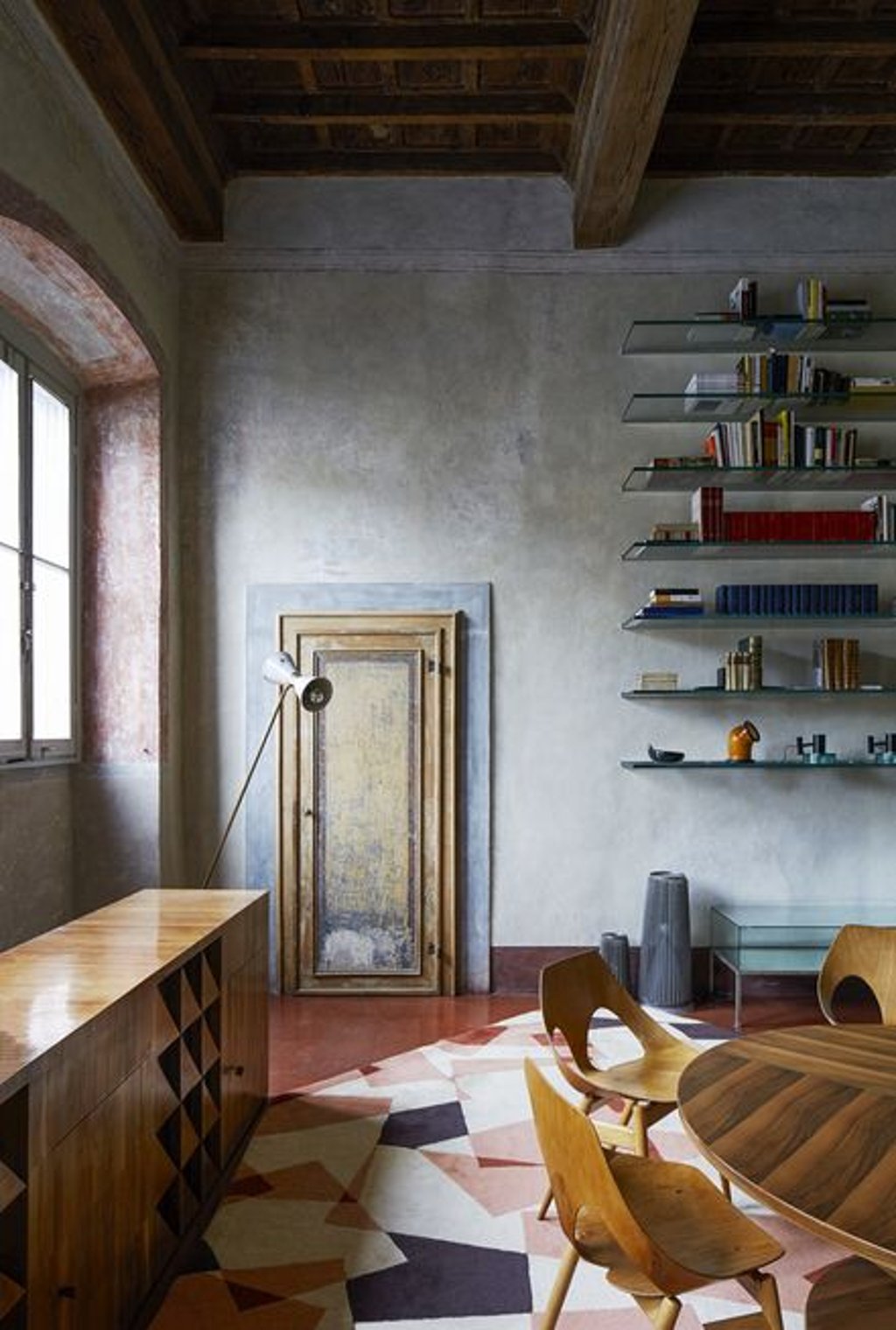
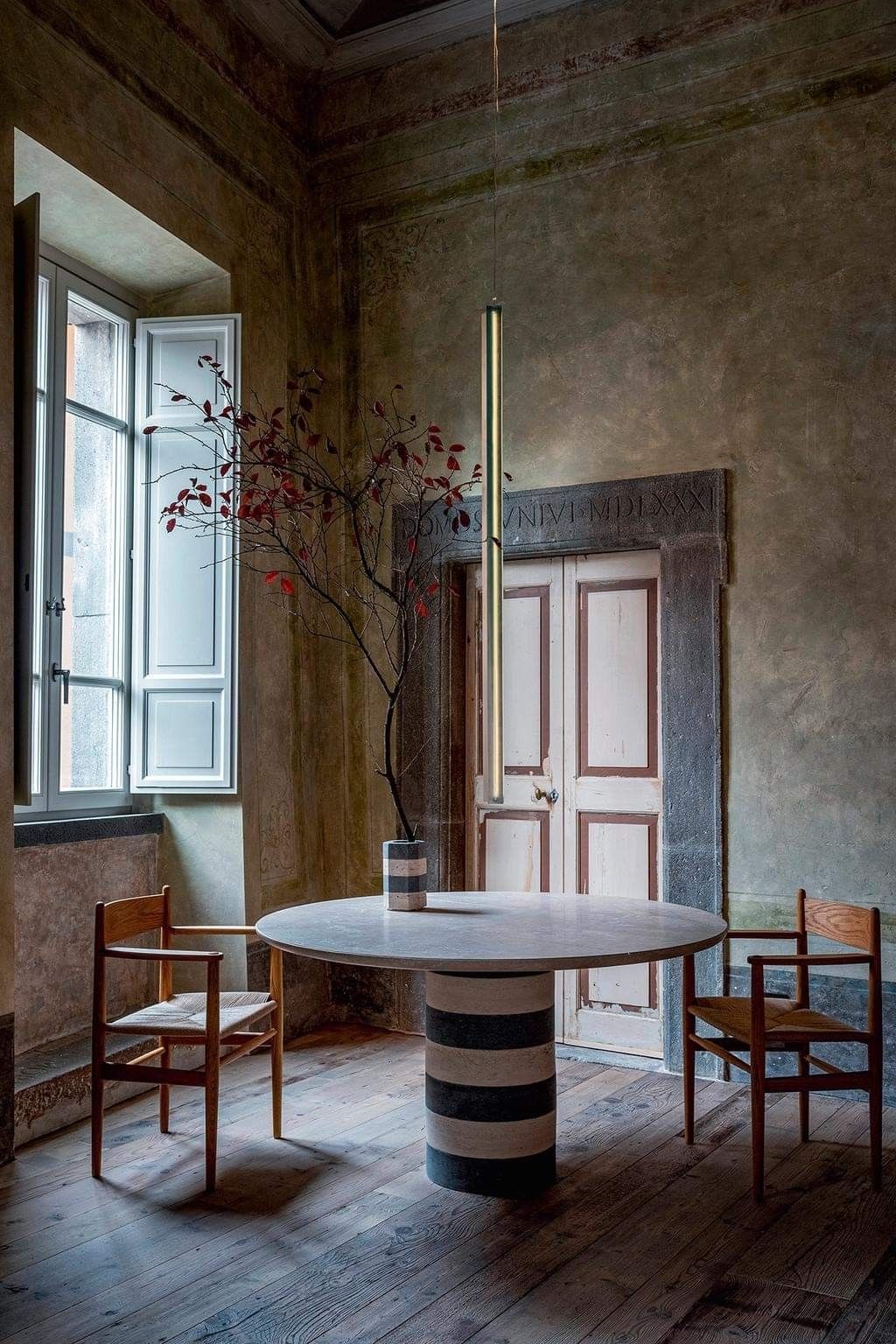
A note on the images: most of the pics are extraordinary Italian properties, and I chose them deliberately. I wanted to show the argument at its most dramatic because when you see it at this scale the point is impossible to miss. Also because they are gorgeous and we all deserve to dream a little.
But everything I'm describing applies just as well to your 1890s Colonial in Concord or your 1970s deck house in Lincoln. The principle scales down. The conversation between old and new works at every level.
The first 2 images are from the Maxalto Heritage Perspectives catalog by Antonio Citterio. The remaining images are by photographer Simon Watson, who is one of my favorite architecture photographers and loves to picture ancient buildings.
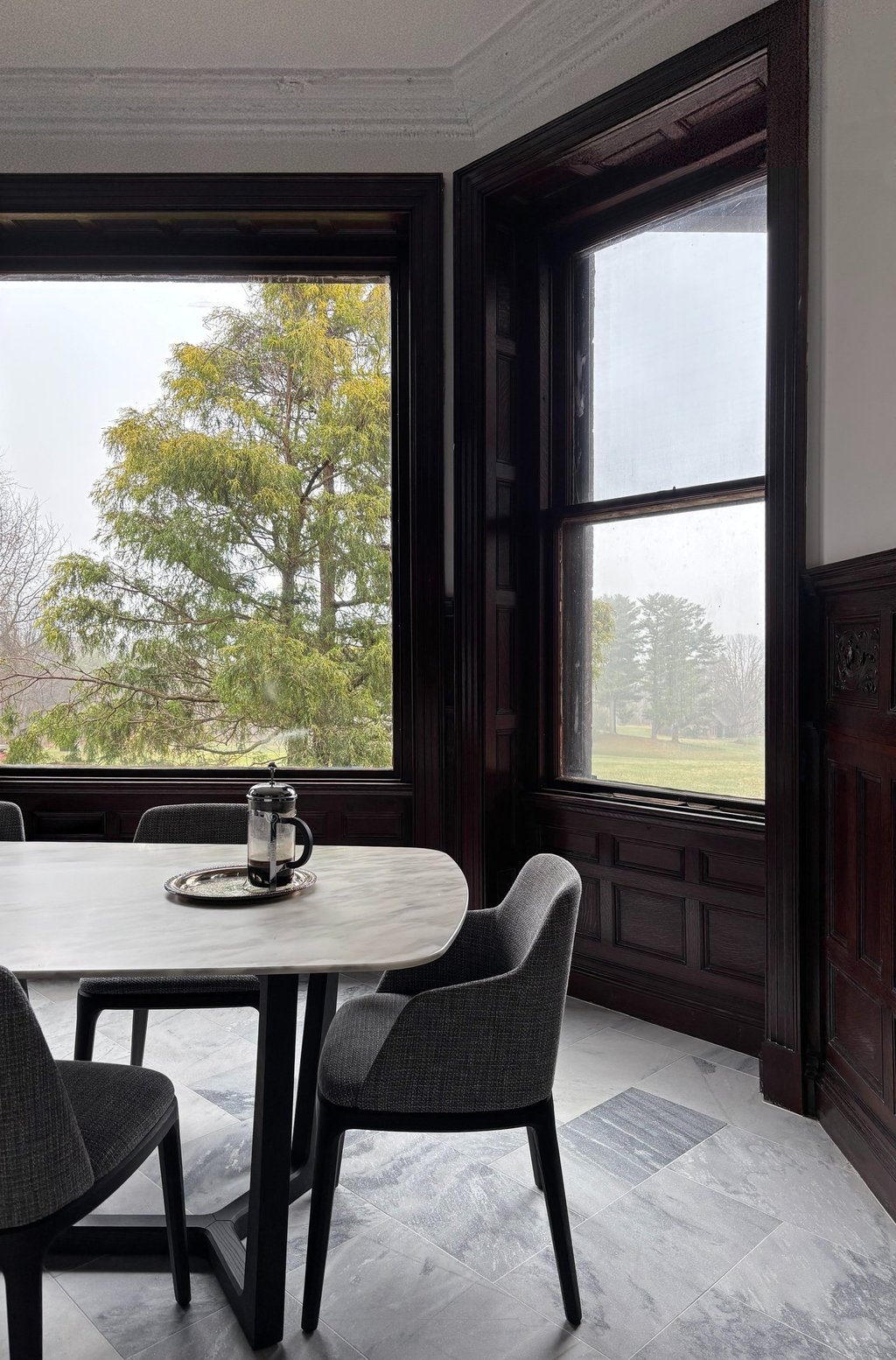
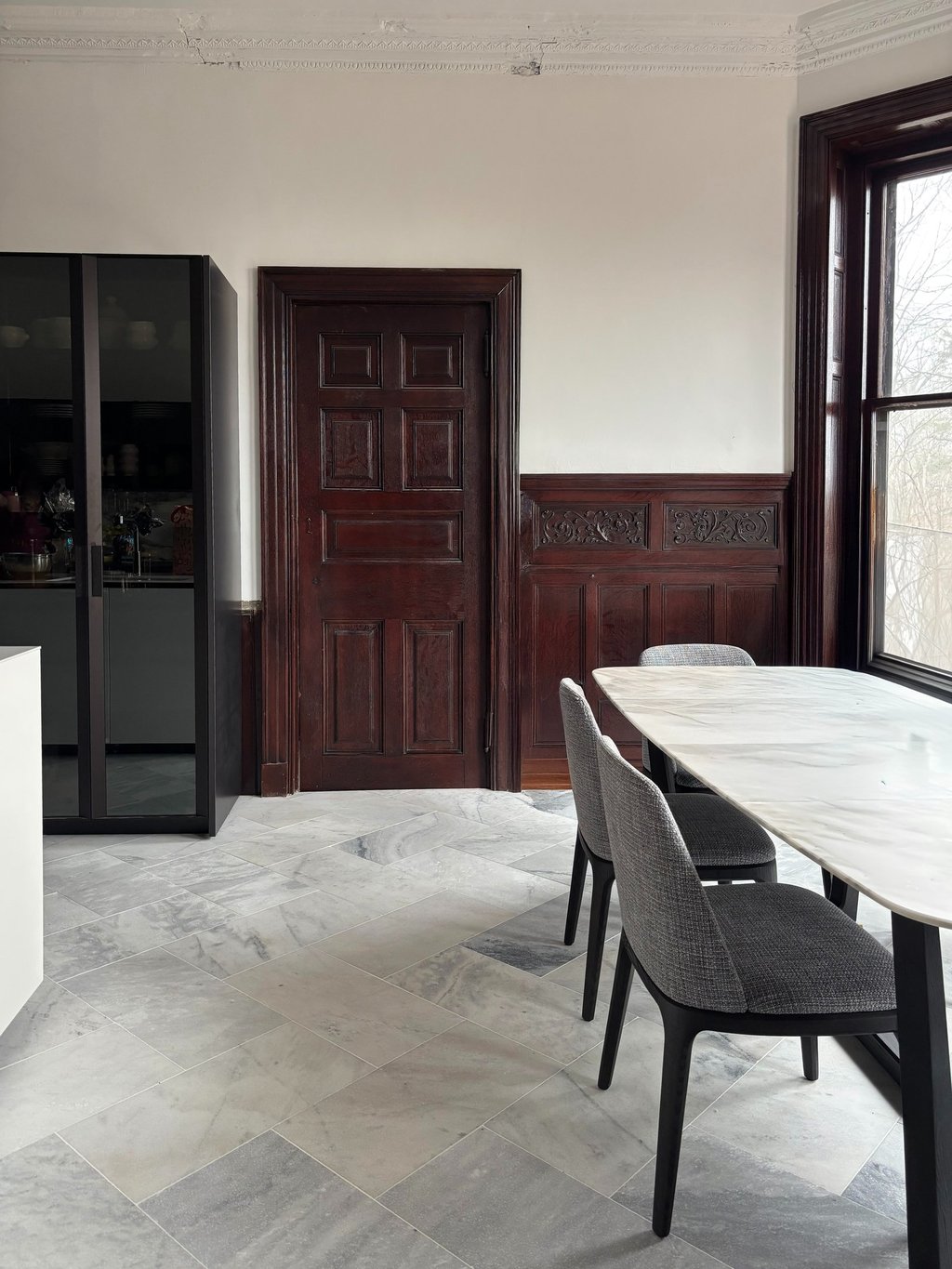
The last three images are from a Tudor Revival home in Lancaster, owned by a good friend who asked for my input on a few things and I recommended a kitchen by Poliform. The result speaks for itself, that Concorde table with Grace chairs are to die for.
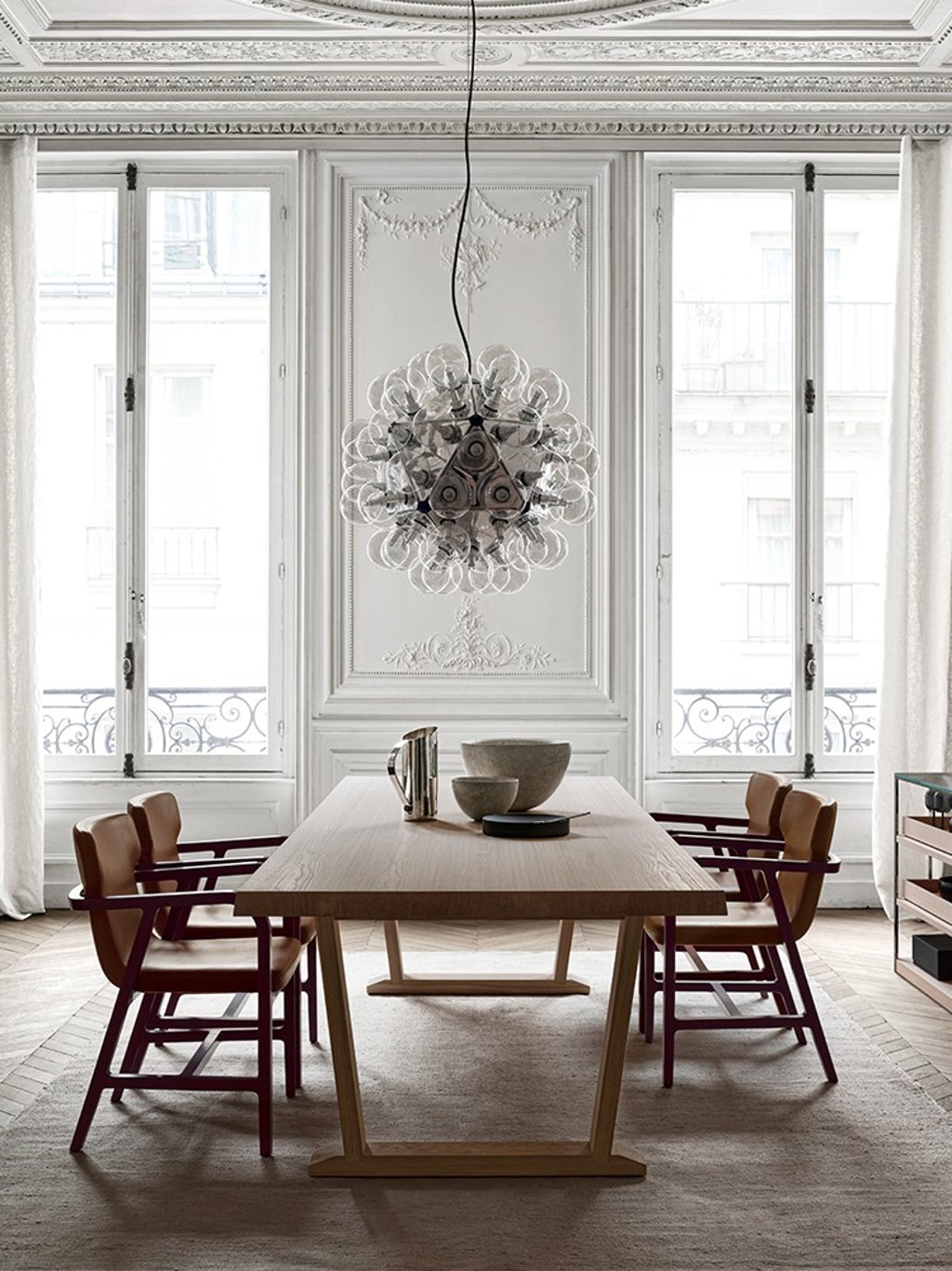
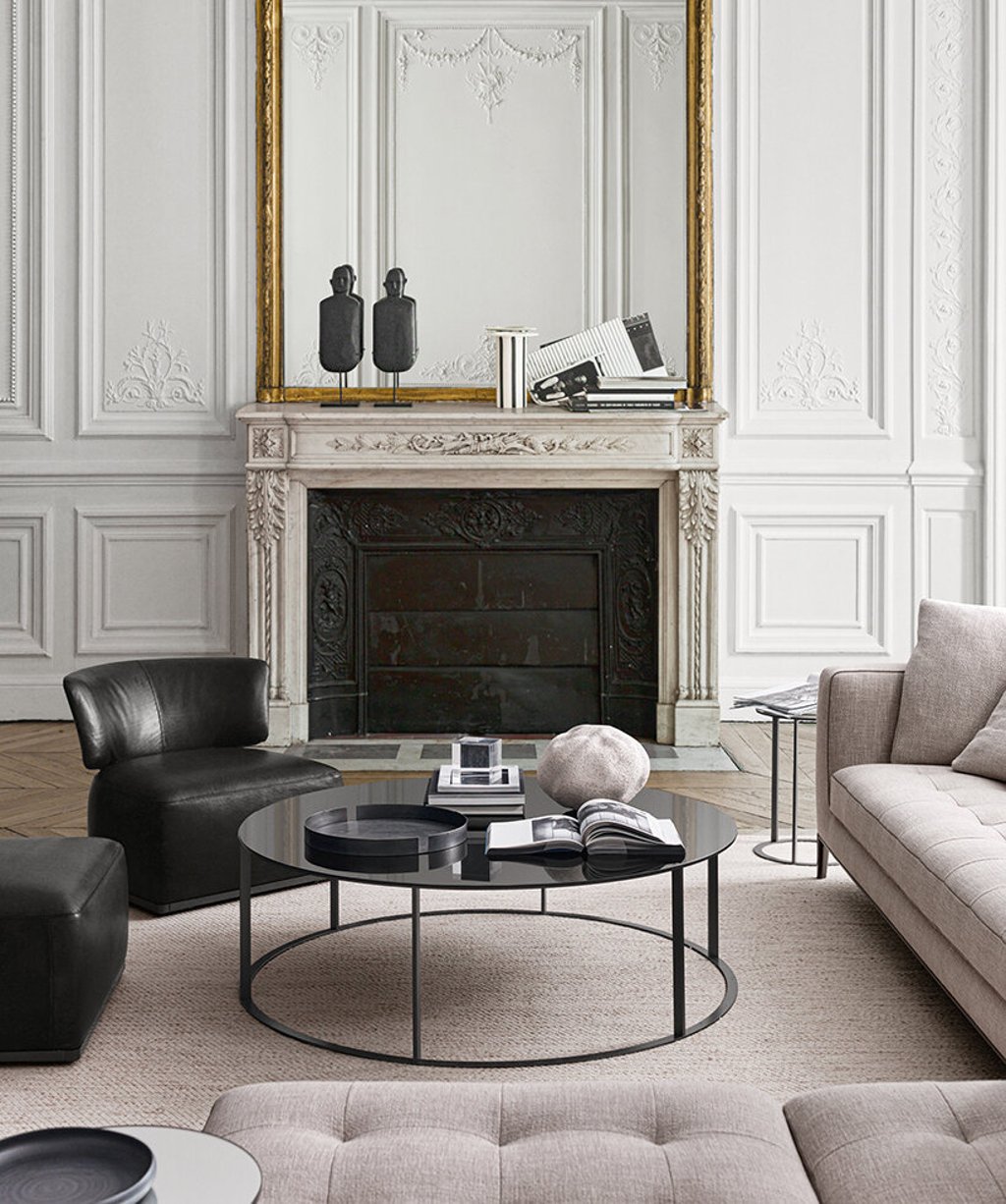
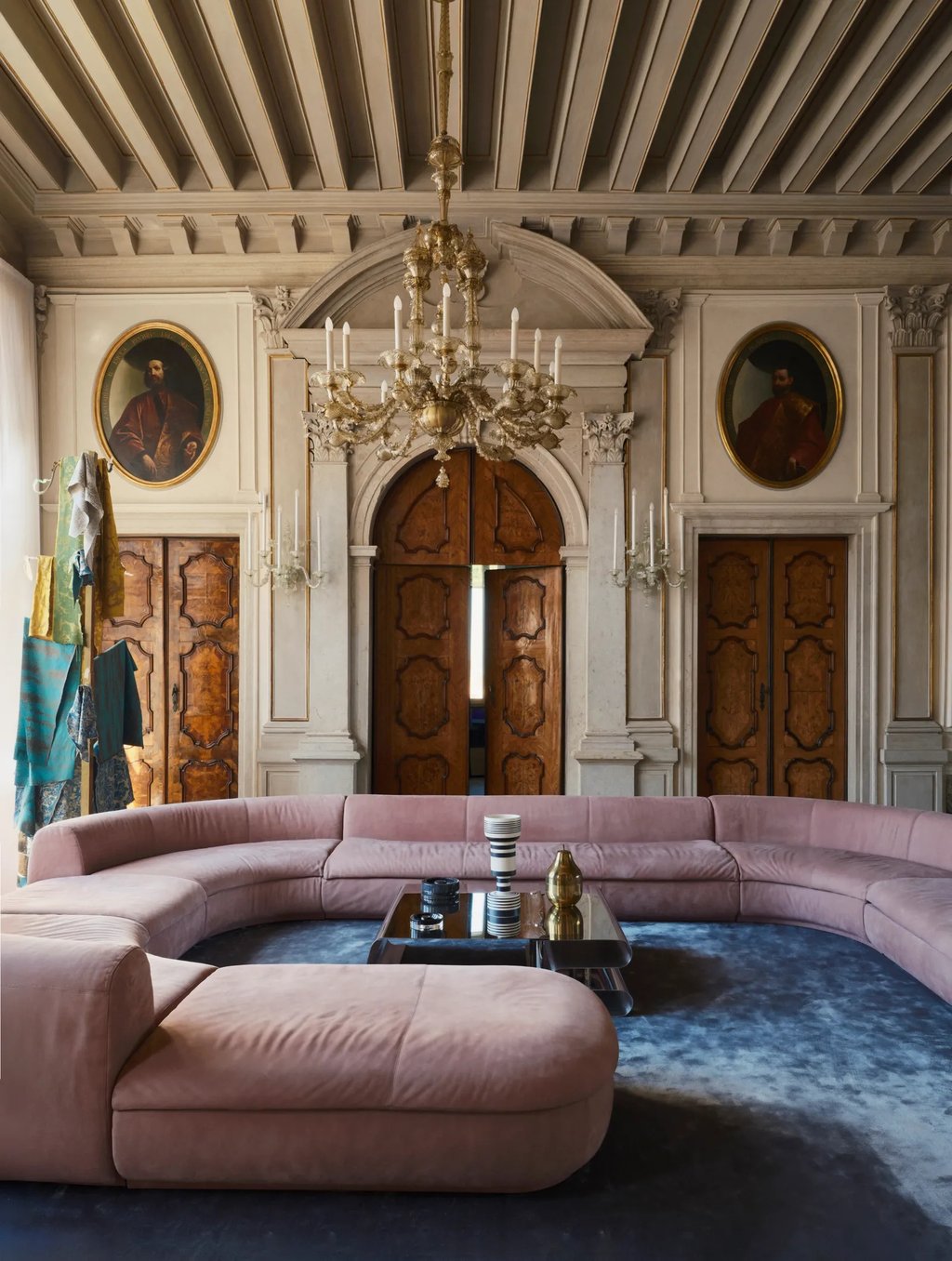
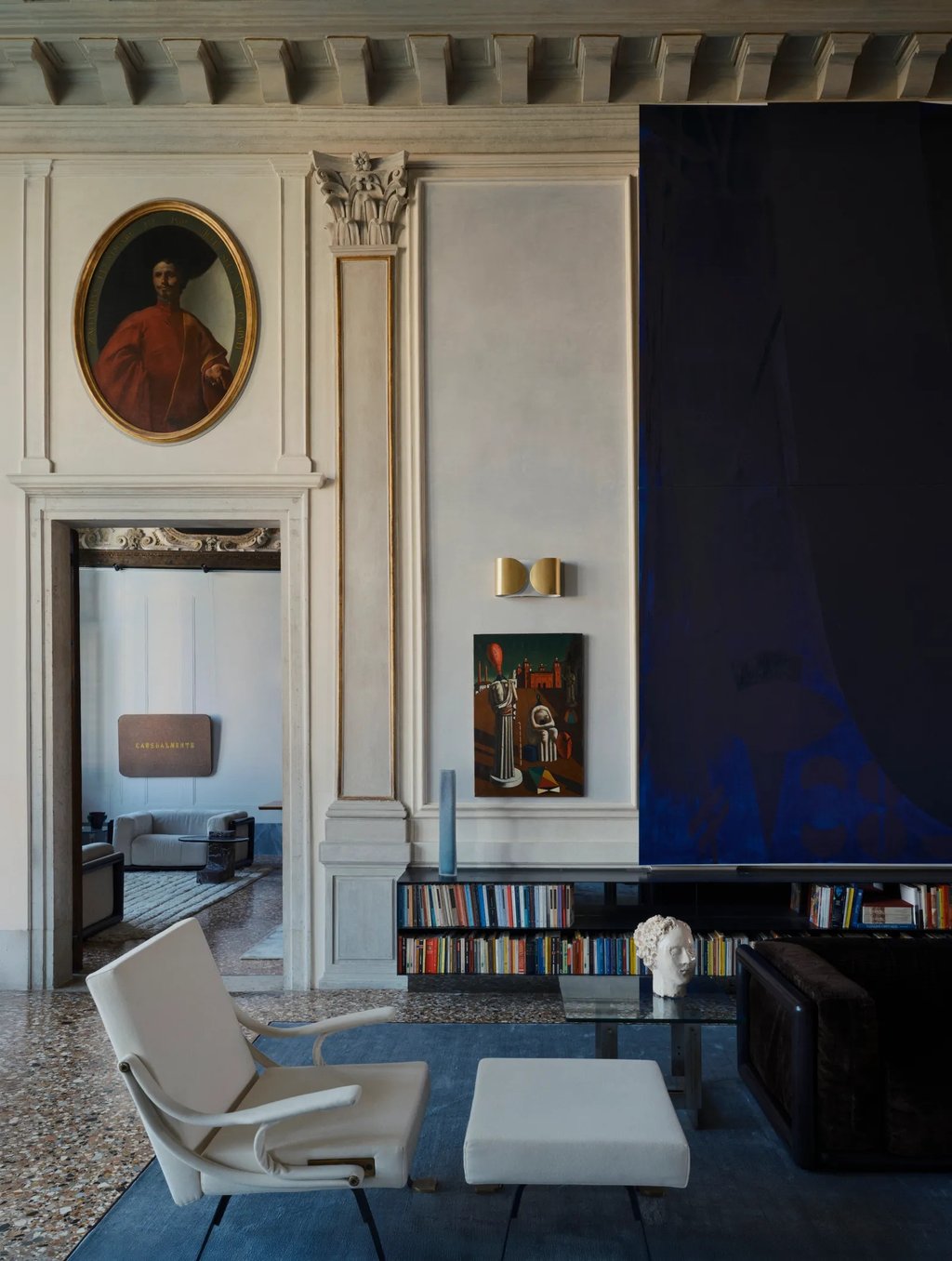
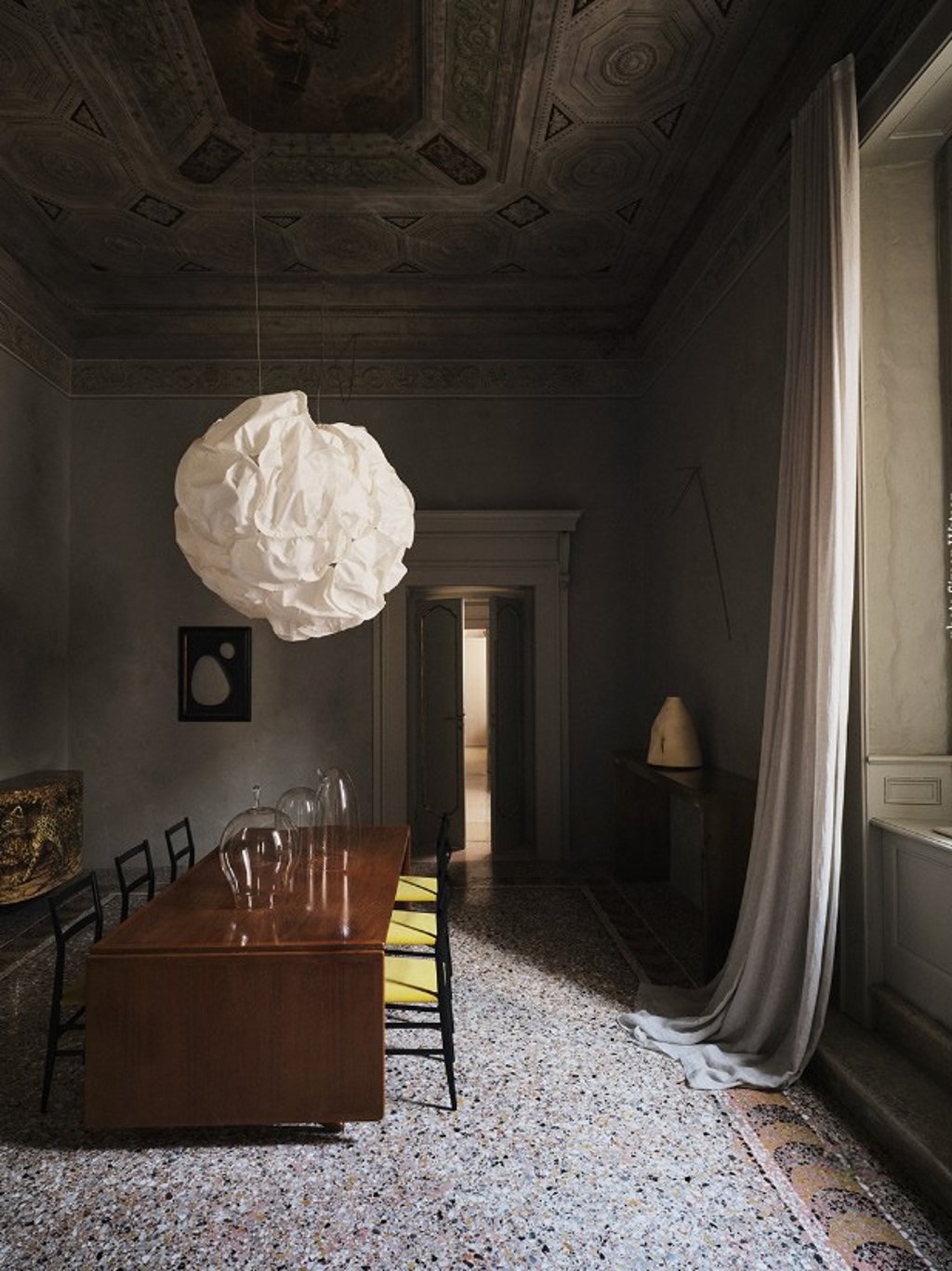
B&B Italia Maxalto Heritage Perspectives collection by Antonio Citterio. From the Maxalto catalog
Private home of the interior designer Roberto Baciocchi in Tuscany. Photo Simon Watson.
Palazzo Contarini Bombassei, Venice. Interior design by Luca Bombassei. Photo Simon Watson for Architectural Digest
Palazzo Petrvs, Orvieto. Interior design by Giuliano Andrea dell'Uva Architetti. Photo Andrea Ferrari Studio.
The views expressed in this journal are my own and reflect my professional experience and personal opinions. Any references to specific places, institutions, or practices are made for informational and illustrative purposes only. Nothing in this journal constitutes legal, architectural, or regulatory advice. Always consult a qualified professional for your specific situation.
B&B Italia Maxalto Heritage Perspectives collection by Antonio Citterio. From the Maxalto catalog
Palazzo Martinengo della Motella, Brescia. Interior design by Paola Moretti. Photo Simon Watson.
Palazzo Contarini Bombassei, Venice. Interior design by Luca Bombassei. Photo Simon Watson for Architectural Digest
Restored historical trims and Poliform furniture for this breakfast room in Lancaster, MA.
The wall panels were meticulously stripped and stained anew in this historical kitchen in Lancaster, MA.
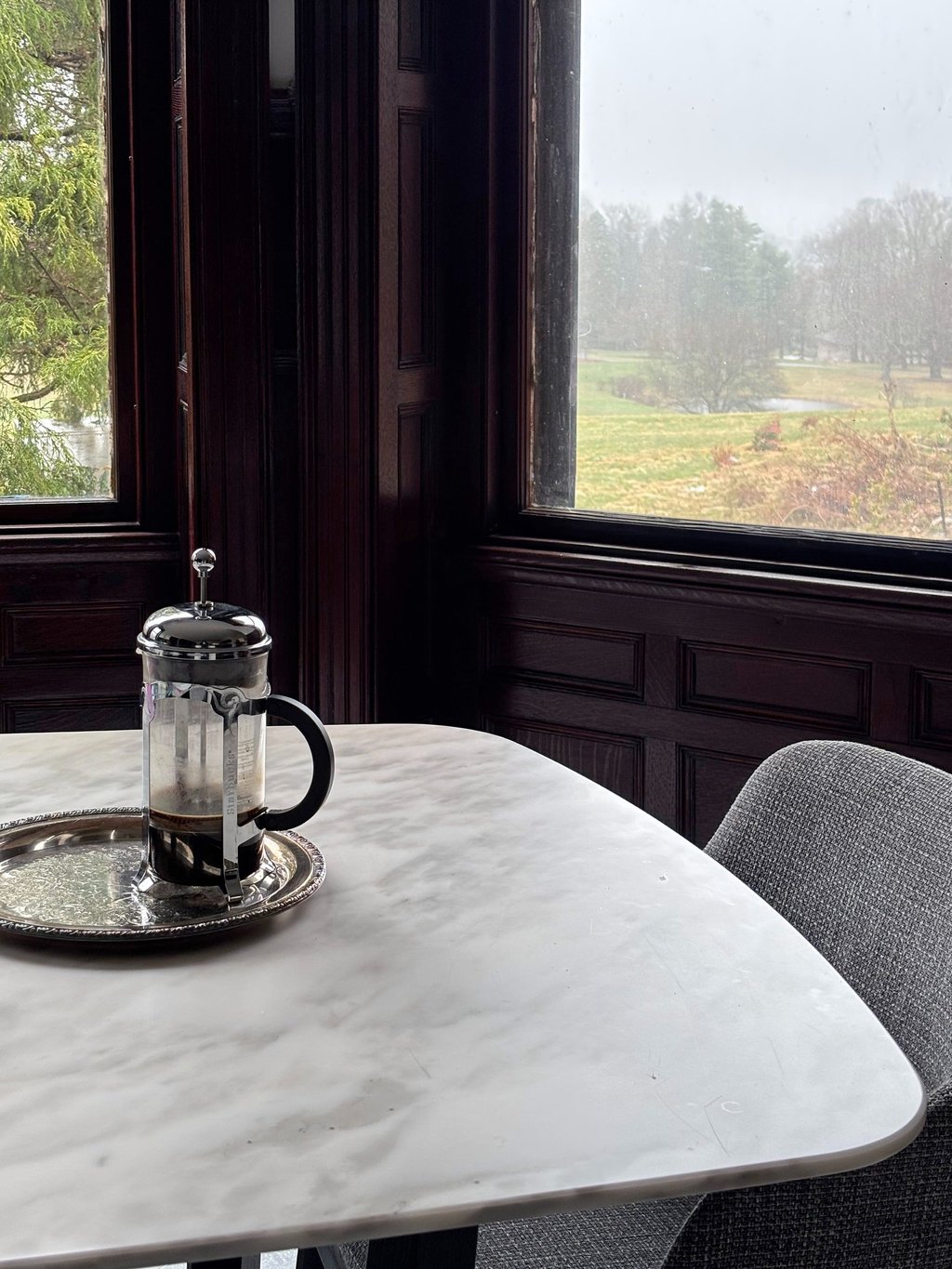
A little artistic shot, I loved the French press in this historical kitchen in Lancaster, MA.
________________________________________________________________________________________________________________________________________
Have a question about this topic or something else you've read here?
________________________________________________________________________________________________________________________________________
________________________________________________________________________________________________________________________________________
____________________________________
____________________________________