Why I Help Expats Buy Property in Italy. An Italian Licensed Architect in the US
I do property due diligence in Italy for expats who want to buy property in Italy the right way. I'm an Italian licensed architect based in the US and this is my story.
ITALY
Erica Fossati
8 min read
The first time I saw the Duomo di Milano I was three years old. My parents took me out for an evening and I remember coming up out of what I now understand was the tunnel of the subway, walking from darkness into light and seeing this enormous white thing in front of me that looked like a cloud but also looked like it had been there forever, and the more I looked the more I saw: animals, flowers, faces, entire worlds hiding in the stone. I didn't know what it was or what to call it, I looked at it and thought That Is What I Want To Do When I Grow Up.
I also didn't know that it took six centuries of construction to (almost) finish it, managed since 1387 by the Veneranda Fabbrica del Duomo di Milano, which is the world's oldest continuously operating building committee and remained in uninterrupted operation for over 630 years. The Duomo is technically still not finished, and the Veneranda Fabbrica is still at it, which I find both inspiring, disturbing and deeply relatable. Some mixed feelings there.
That childhood dream led, after a chicane of other dreams where I wanted to be an archaeologist / a bohemian artist / a farmer / a professional volleyball player, etc, to the Politecnico di Milano, which is the best architecture school in Italy and virtually free, which means you cannot buy your way in and they make sure you know it. We were 750 in my year and we arrived at the end of the masters in 150, then you sit for the licensing exam and they pass maybe 10 percent of those. They throw you in the water with barracudas and either you swim or you die, and what that teaches you beyond any specific technical knowledge is how to be an excellent problem solver under pressure and how to function in difficult and sometimes hostile situations without falling apart, which as it turns out is most of what practicing architecture actually is. Vitruvius said firmitas, utilitas, venustas: solidity, usefulness, beauty, in that order. The Politecnico added a fourth category that he forgot to mention, survival.
After graduating I landed at Studio Colombo in Porta Venezia and among the projects we worked on the biggest and most demanding was Villa Salviati in Fiesole. It was significant enough an endeavor that it required many a Freccia Rossa at 5am, which was pretty cool but also tiring as hell. The Salviatino had been abandoned for thirty years and had what we in the profession call incredible bones, which is a polite way of saying it was a beautiful disaster. The interiors were in pretty good shape but the exteriors had extensive exposure damage from decades of neglect, every system needed replacing, everything needed to be brought up to code. We had a massive vincolo (a heritage protection constraint) on basically everything, which made some things very complicated and other things, paradoxically, easier. Heritage protection in Italy is simultaneously the most frustrating and the most useful tool in the box, depending on which problem you're trying to solve that day. Working there felt a lot like being Indiana Jones, except with a considerable amount of paperwork. There were secret passages, hidden rooms, a concealed chapel. And then one day during construction, while workers were removing a dropped ceiling that had been installed at some point over what had served as a kitchen, someone called me over. Behind the soffit, undisturbed for decades was a fresco vault, entirely intact, waiting for someone to find it. What a great time it was, every day a new discovery, there seemed to be no limits to the surprises that the Salviatino had in store for us, good and bad. I've been chasing that feeling in every project ever since.
After a few very busy years at Studio Colombo I decided, with a heavy heart, to be closer to my family, so I landed at Studio Magnano which was right next door to my parent's village, it later became Studio Sequel and is now one of my long-time Italian collaborators. That's where I found my architectural family, the people I still work with today. But life had some diagonal, unpredictable curve ball in store for me. One day my husband, who is a very smart cookie, was offered a job at MIT and we decided to go. I was doing well and I loved where I was, but I wanted an adventure, I wanted to learn English properly and challenge myself in a completely new context. The challenge turned out to be more than I had asked for, which I say with a laugh now that time has passed but you can rest assured I didn't laugh at all back then. It's hard to arrive in a new country with real working experience but zero local references. I had to learn the imperial system, which excuse me if I say it but seriously? It's the most insane thing ever! 1/32 of an inch? Someone told me you had the chance to move to the metric system which is beautiful and perfect, but no, you didn't want it! On n'est pas sorti de l'auberge...
I had to understand a construction industry that works differently from the one I trained in and for months I couldn't find work because I was overqualified to be an intern but nobody wanted to take a chance on someone they'd never heard of. Then Jen Hart came along, the first person to believe in me and offer me a job, and I will never be able to repay that debt unless she decides to move to Italy and look for work, in which case we're even. At Hart Associates I spent the first six months trying desperately to understand what people were saying to me. Luckily AutoCad is a universal language. Jen and Steve were incredibly patient and great teachers, and eventually I did understand not just the words but the whole different way the American construction industry thinks about the trade.
Something I noticed quickly once I started working here was that people assumed I was, as an Italian designer, inherently sophisticated which I found baffling at first. Everyone was telling me I was fashionable or that my glasses were tres chic and "you got them in Milano right?", but I really got them at Costco, which is the antithesis of cool. In Italy we are surrounded by extraordinary things constantly, to the point where you stop noticing them, I had grown up in a place where excellence was like normality. It's only when you leave that you understand what you were living in. More practically, I noticed that clients here were used to a certain approach to renovation, which you might call the Let's Gut Everything method, and they seemed interested in mine, which was more about looking hard at what a house already has before deciding what to change. In Italy we make do with what we have, we try to preserve and reuse and not waste, and we treat the existing building as a collaborator rather than an obstacle. That method translated well and it's what I brought to every project since.
The Italy service came later, friends started mentioning they'd love to buy a house in Italy someday, clients asking whether it was possible, and me realizing that most Americans who dream about this are almost completely oblivious to the myriad of problems you can face when actually doing it. Not because they're naive but because nobody had ever properly explained it to them. The building codes in Italy are not like the codes here. Massachusetts has the international code, its own edition, which is honestly pretty manageable. Dealing with the historic district commission here is, I say this with great affection, like cuddling teddy bears, everyone is so nice and helpful and the process is clear. The Soprintendenza in Italy is a different universe entirely with vincoli that are layered and sometimes contradictory. Every town has its own building code and interpretation of rules that are nominally national, and a solution that works in one comune means absolutely nothing in the one beside it. And then there's the Catasto, which is the Italian land and property registry, and the accesso agli atti, which is the right to access municipal building records, and the abusi edilizi, which are unauthorized modifications, and the various things that show up in a due diligence that nobody warned the buyer about because they fell in love with a listing and bought the house before anyone had a chance to look properly. I have seen this happen and it doesn't end well.
I realized I had a knowledge and a network that could help with all of this, so I built a service around it. I help Americans and international buyers find the right property in Italy and navigate the full process of purchasing and renovating it: helping you choose before you fall in love with the wrong thing, commissioning and overseeing the technical due diligence before any offer is made, and coordinating the renovation with my team of Italian professionals on the ground. I'm the single point of contact between a buyer and a system that is difficult to navigate if you didn't grow up in it. I speak both languages, the technical English and the technical Italian, and I understand both sides of what the process requires.
The mistake I see most often is buyers who skip the due diligence entirely. They see a listing, they do a site visit, the house costs so little relative to what they're used to that it feels like an obvious yes, and they buy it. Then the real situation reveals itself: unauthorized modifications, cadastral discrepancies, heritage constraints nobody mentioned, a roof that was never going to survive another winter. I'm not trying to scare anyone away from Italy, I love my country and I want these properties to be bought and restored by people who care about them. I just want buyers to go in with their eyes open, which is what a proper due diligence is for.
In Italy we don't take legacy lightly. What we've inherited, the buildings, the landscapes, the craft traditions, the accumulated beauty of thousands of years of human civilization, is not ours to keep, it's ours to pass on to our children and their children till the end of times. When I see a historic property crumbling because no Italian family can afford to restore it, I'm overwhelmed with sad. In my experience the foreign buyers who come to Italy for this reason are often the most respectful clients I encounter. They come in wanting to do things properly, to integrate the renovation within the existing context, to be tasteful rather than flashy. They're not all doing it for the Instagram, most of them do it because they feel a connection to our history and want to help preserve something they find extraordinary, and honestly most of them end up falling in love with the place, learning Italian, becoming themselves part of our beautiful people. Italy has enough beauty to share with the rest of the world, and I would rather see it loved by foreigners than left to crumble by indifference.
So if you've been dreaming about some crumbling Italian beauty that everyone else has given up on, let's go get it and bring it back. Per aspera ad astra!
Ciao.
The views expressed in this journal are my own and reflect my professional experience and personal opinions. Any references to specific places, institutions, or practices are made for informational and illustrative purposes only. Nothing in this journal constitutes legal, architectural, or regulatory advice. Always consult a qualified professional for your specific situation.
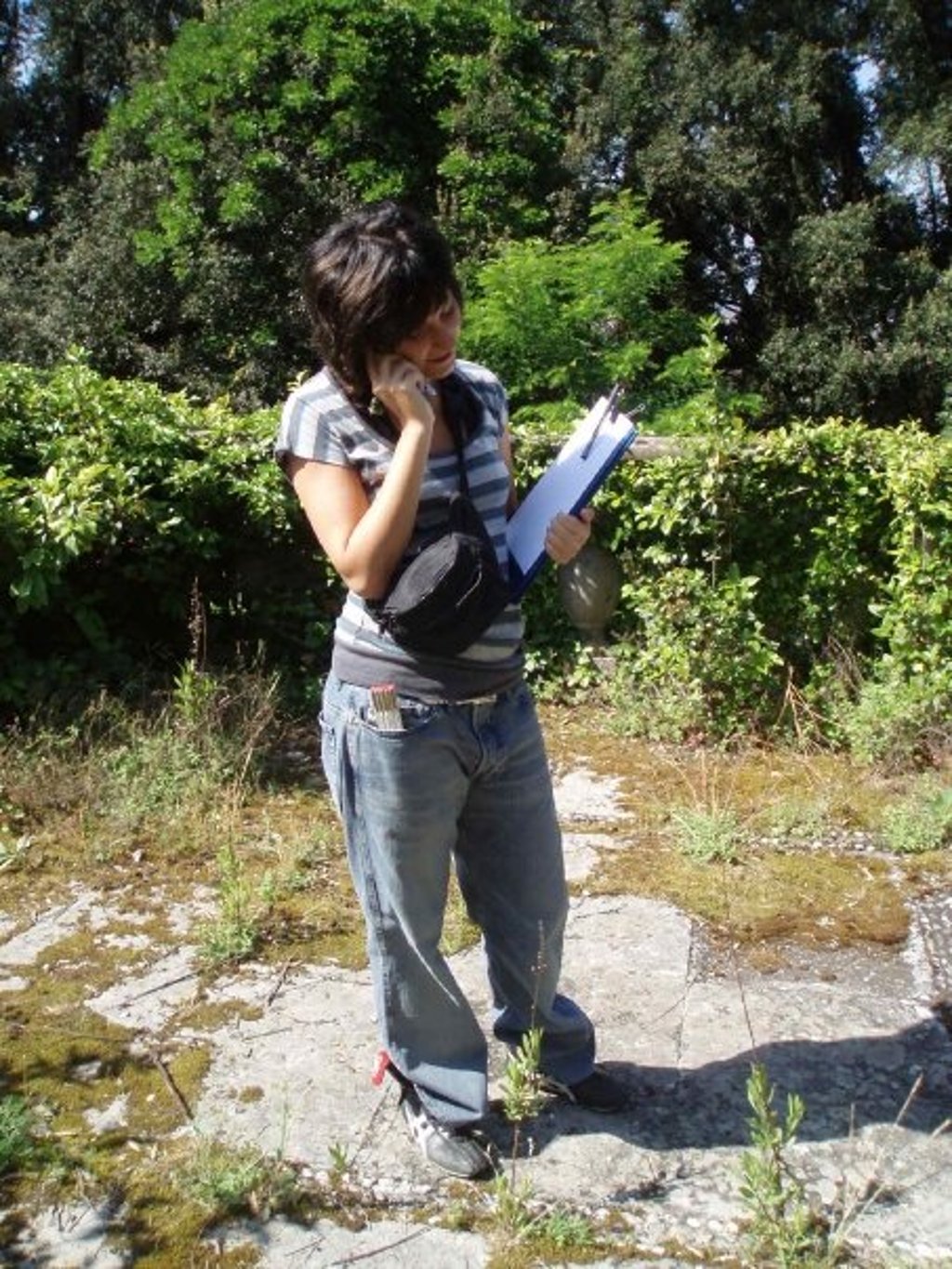
Fiesole 2006. 25 yo me with a questionable haircut but impeccable on site attire during our first survey of the Salviatino.
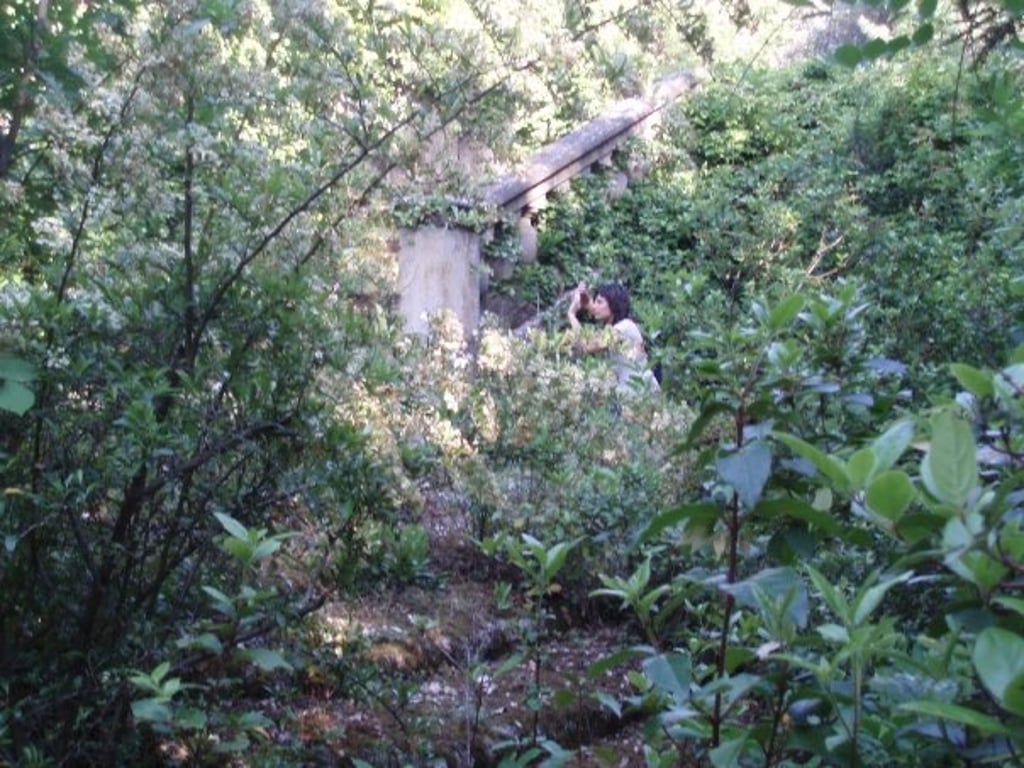
Fiesole 2006. It was so overgrown that one could barely catch the architectural details, or the architect within.
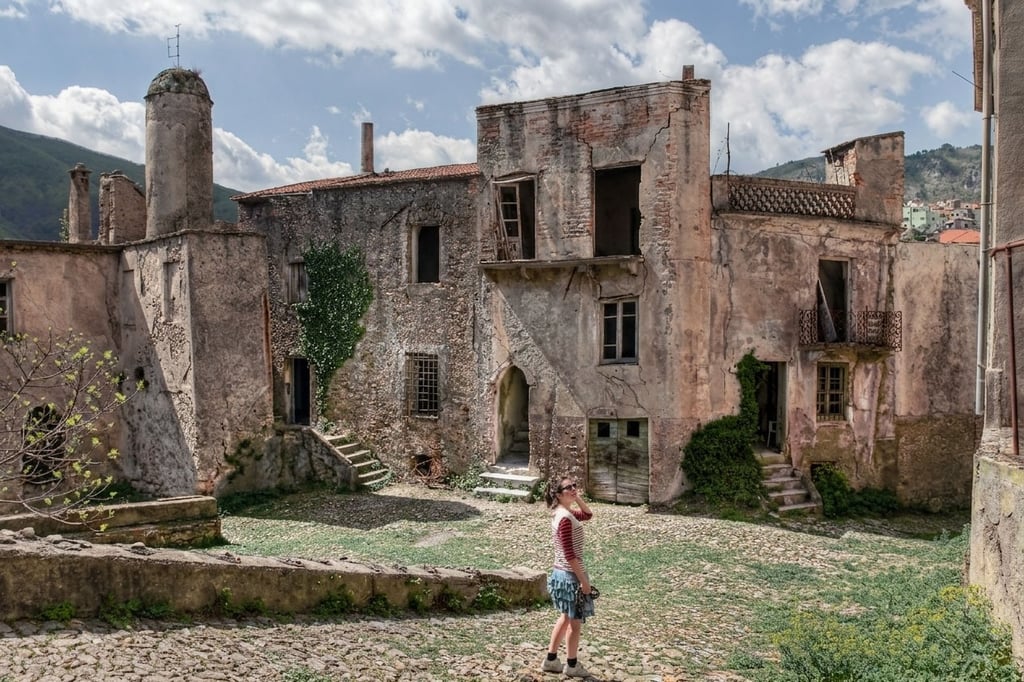
Exploring the borgo of Balestrino (SV). Abandoned for severe hydrogeological instability after the 1887 Liguria earthquake the old centre is a ghost town whereas the modern center is still inhabited today.
________________________________________________________________________________________________________________________________________
Have a question about this topic or something else you've read here?
____________________________________
____________________________________
_____________________________________________________________________________________________________________________________________
_____________________________________________________________________________________________________________________________________