How I Plan a Kitchen Renovation (and Why the Order of Decisions Matters)
Eight decisions that actually matter in a kitchen renovation, in the order they should be made. Layout, stone, appliances, materials, and why your kitchen is not a Florentine cathedral.
DESIGN TIPS
Erica Fossati
12 min read
Every time, no matter who walks through my door, no matter their background or education or aesthetic sensibility or how long they have been thinking about this project, they all arrive at the kitchen renovation conversation in almost exactly the same way.
They have spent six months on Pinterest. They have a very clear vision of the cabinet color. They have already decided they want an island. They have a quartz sample on their kitchen counter that the showroom gave them and they are fairly attached to it. And then they hire me, and the first thing I do is put all of that on pause, I make the quartz sample mysteriously disappear, and then we sit down and have a good talk.
Below are the 8 steps I cover on that first talk, always in the same order. They are not the only decisions you will make in a kitchen renovation, not by a long shot, but they are the ones that determine whether everything else goes well or badly.
PS: Step zero is hire a designer, Il va sans dire.
Step 1: Figure Out The Layout.
Before a single material is discussed, before we even look at a stone yard or open a catalog, the layout has to be fully resolved, not approximately figured out but actually resolved, because the layout is where the intent lives. It determines how many people can function in the space simultaneously, whether the workflow makes sense for how you actually cook, where the light comes from, where the ventilation goes, and whether that island you have been dreaming about actually fits or is just going to sit in the middle of the room looking apologetic.
The island conversation is one I have at least once per kitchen project and it always goes pretty much like this: the client wants one. Which is fine. An island, when it belongs, is wonderful. The problem is that for a lot of people the island has become an idea divorced from function, something you want because you have seen it in enough kitchens that it feels like a standard feature rather than a design decision. It is not a standard feature. It is a layout decision that requires a specific set of conditions to work: enough clearance on all sides, a room geometry that supports it, a workflow that benefits from it. A small island jammed between the counter and the opposite wall is not an island, it is an obstacle with ambitions above its station.
And please, don't get me started on island sinks and cooktops. They are beautiful in a photoshoot, in a real kitchen where real people cook, you will spend the rest of your life wiping splatter off surfaces that were never designed to be splattered on. I have a little problem with cleanliness that some might call clinical, and the thought of a cooktop in the middle of an island makes me rabid. If you cook, and you plan to actually use your kitchen, keep the cooktop against the wall where it belongs.
Repeat with me: layout first, everything else is downstream.
Step 2: Are You Ever Going To Enter Your Kitchen
Feels a bit like a rhetorical question but you'd be surprised.
I always ask clients who are planning a kitchen renovation: how do you actually use this room? Not how do you imagine using it, how does this room actually function in your life?
I ask because the kitchen has not always been what it is now. For most of the twentieth century it was the utilitarian workroom, dark, located at the back of the house, designed for one person working alone on a schedule. The Frankfurt Kitchen, designed by Margarete Schütte-Lihotzky in 1926, is the canonical example: a compact, sealed-off machine for efficiency, conceived at a time when the assumption was that nobody should have to see the kitchen, let alone be in it. That model is gone, or it should be.
The kitchen is now the room where life actually happens, and I say this not as a design observation but as a personal one. As I may or may not have said a couple times, I am Italian. When I have people over, which I do often and in numbers that would alarm a fire marshal, they are in the kitchen. All of them. I cannot get them to go to the dining room for the love of me. Lots of my friends are Italian too, which means that at some point in the evening someone will start cooking, unsolicited, in my kitchen, because that is just what happens. Food is my people's love language and the kitchen is where that language gets spoken.
This is why I always push for a proper eating area within or directly adjacent to the kitchen: a breakfast room, a banquette, a table that lives in the kitchen rather than being separated from it by a hallway. The convenience of cooking and eating in the same space is enormous for everyday life, and it changes how the room needs to be designed. It needs to be comfortable, not just functional. It needs height and light and enough room for people who are not cooking to stand around and be in the way without making the cook insane.
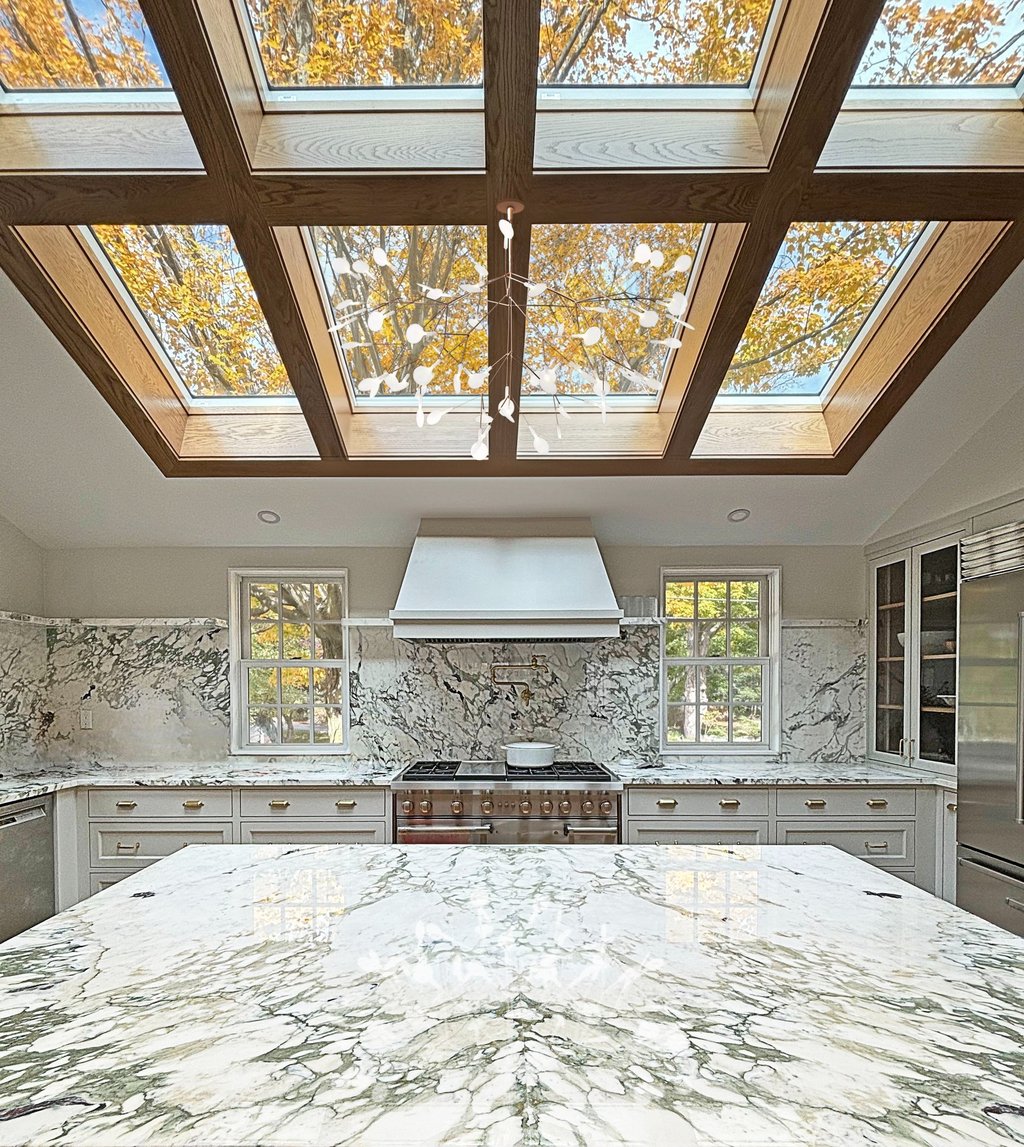
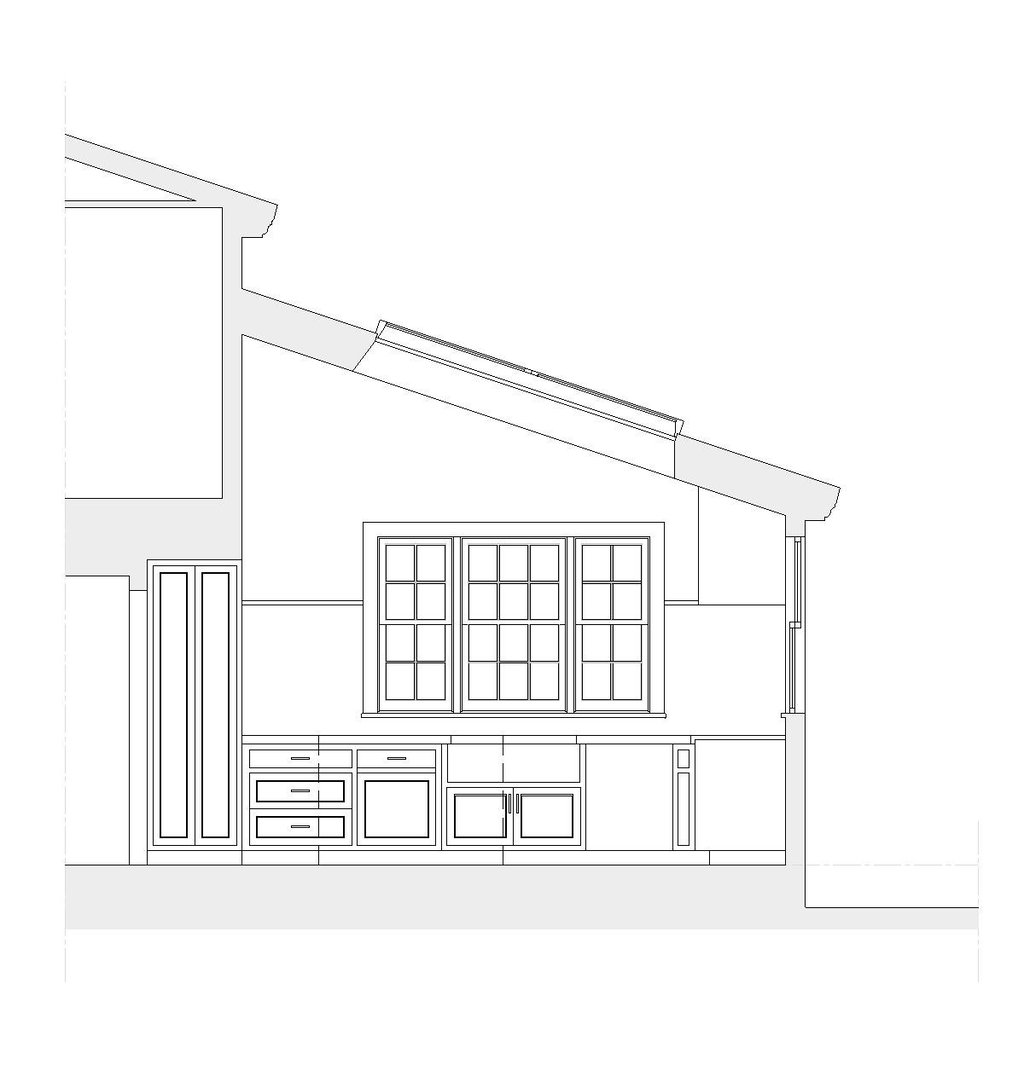
Height changes everything, more than almost any other variable. The most extraordinary kitchens I have worked on or visited have been the ones where the vertical dimension was treated as a design element rather than an accident of construction. A kitchen with dramatic height and a skylight over the workspace is a different experience from any other kitchen. If the structure allows it, I will always push for more height and I will always push for a skylight if it is at all possible. The quality of light you get directly overhead while you are cooking is irreplaceable, and as a side benefit it is magnificent for growing herbs on the counter, which is a small thing that makes a kitchen feel alive.
Step 3: Figure Out If You Actually Cook AKA How To Choose Appliances
In Europe, nobody is looking at your appliances. Everything is behind panels, flush with the cabinetry, the whole room reads as a continuous surface and the appliance is infrastructure, not statement. In the United States it is the opposite: the range with the big knobs, the statement refrigerator, the commercial hood that announces itself from across the room. Appliances here are status objects and they are meant to be seen.
Part of this is practical. European homes are older, smaller, and the cooking space is typically a separate room that closes off from the rest of the house. When nobody sees it, you design it like a workshop. The American kitchen is historically open to the living area, which means guests are standing in it while you cook, which means it needs to look like a room. Different assumptions, different results.
My position is that the right answer depends entirely on whether you actually cook. A Lacanche or a Wolf in a kitchen that gets used is a completely legitimate design decision, a tool you interact with daily that earns its presence. The same range in a kitchen where the primary activity is reheating and the occasional scrambled egg is expensive theater. If you do not really cook, panel everything and be done with it. The cleanup alone makes it worthwhile.
One correction I find myself making constantly, since I am Italian and apparently this is my responsibility: Bertazzoni is not what Italian kitchens look like. In Italy you are far more likely to find a Smeg or a Miele. Bertazzoni has done an extraordinary job of marketing itself as the Italian kitchen brand for the American market, and the branding is pretty, but if you walked into a kitchen in Milan or Bologna and asked where the Bertazzoni was, you would get a blank look. Not a criticism of the product, just a small correction to the mythology.
Step 4: Go To The Stone Yard Before You Do Anything Else.
This is the part where I need to unleash my best persuasion skills, because the conventional wisdom is that stone is a finish selection, something you pick toward the end once the cabinets and the overall direction are established. I do the opposite. After the layout is locked, the first thing I do is take the client to a stone yard, and not just any stone yard: I take them to Cumar in Everett, which has one of the most extraordinary selections of natural stone I have encountered in New England.
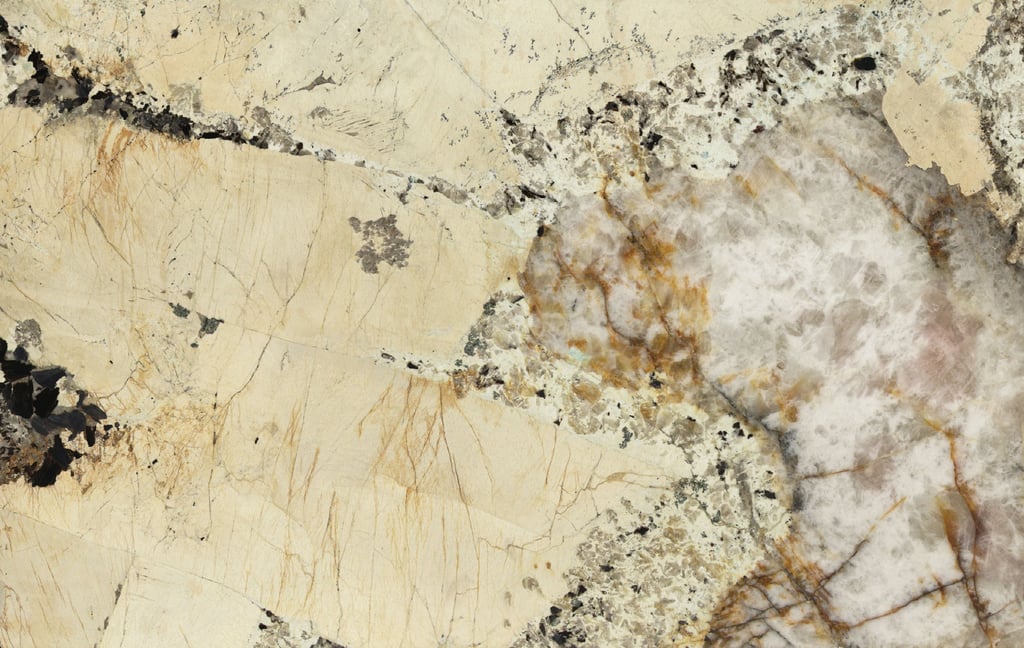
Stone for me is a design driver not just a finish. A slab of the right material, the right movement, the right color temperature, can set the entire direction of a kitchen in a way that no paint chip or cabinet sample ever could. And almost every client, when they walk into a proper stone yard for the first time, is completely unprepared for what they see. They came in thinking marble, because that is what they know, and they find themselves standing in front of something that looks like a Jackson Pollock painting, or a quartzite with movement so complex it looks like aerial photography of a river delta, and suddenly the kitchen they had been imagining in the abstract starts to become specific. The stone becomes the anchor, everything else gets organized around it.
I am Italian. I grew up surrounded by stone: on floors, on facades, on window sills, in piazzas, in churches, on kitchen counters, on the streets. For me, natural stone is not a luxury finish, it is simply the correct material. It is art made by nature under pressure and the ages, and it is more interesting and more beautiful than anything we could manufacture. This is partly nostalgia but mostly a material argument, and I will make it every time.
Step 5: Pick Your Stone, and No, Not That One
Quartz. The engineered stone product that has taken over approximately every kitchen renovation in America and that I find painful to look at. Before you close the tab: I understand why people choose it, I understand why contractors push it, I even understand the technical argument for it, I just completely and utterly disagree with the conclusion.
The case for quartz is essentially a case for predictability. It doesn't need sealing, it won't surprise you, and every slab looks like the last one, which makes it easy to order, easy to install, easy to warrant, and easy to sell from a catalog without the client needing to come in and approve a specific piece. The fabricator loves it because it almost never breaks unexpectedly on the table, unlike natural stone, which can split along an invisible fissure at the worst possible moment. The vendor loves it because the manufacturer absorbs the warranty claims. It's a convenient material, from a logistics standpoint, and that is exactly the problem, because none of that is a design argument. It's a supply chain argument. And the result, in most cases, is a surface with veining that's too regular, movement that's too controlled, a manufactured approximation of something real that reads as exactly what it is. The plain versions, the ones with no grain or minimal pattern, are marginally more honest about what they are, but at that point I have to ask: why not use a good honed limestone or a solid-color marble and have the real thing for a comparable price?
There's also the heat problem. Quartz is made with resin binders and those binders don't like heat, so a hot pan set directly on the surface can discolor or deform it permanently. On a natural stone surface you can put a pan from a 500 degree oven directly on the counter without a second thought. It's a kitchen. The whole point is that things get hot.
I'll grant quartz one thing: it's consistent, which for a certain kind of client has real value. If you want no surprises, no variation, no maintenance, and no emotional relationship whatsoever with your countertop, quartz will deliver on all of those. I just think that's a low bar for something you're going to spend that much money on and look at for the next twenty years.
Step 6: Acknowledge Your Kitchen Is Not a Florentine Cathedral
While we are on the subject of stone: can we talk about Carrara?
Carrara marble is one of the most beautiful materials in the world. Michelangelo used it. The Pantheon is made of it. The facade of Santa Maria Novella is Carrara marble. It is a stone with an extraordinary history and a visual quality that is, in the right context, absolutely breathtaking.
Unfortunately your kitchen in Concord Massachusetts is not that context.
Carrara is soft. On the Mohs scale of mineral hardness, marble sits at around a 3, which means it is scratched by a copper penny, etched by a lemon, and permanently marked by a glass of red wine left on it for twenty minutes. In a kitchen, which is an acid-rich, impact-heavy, frequently wet environment, Carrara requires either religious maintenance or a very high tolerance for a surface that will look worn within a few years. I am not saying it cannot be done. I am saying it is almost never the right answer for a working kitchen, and the reason people keep choosing it is not that it is the best stone for the job, it is that it is the stone they know. They have seen it everywhere because it photographs beautifully and because the design media has been pushing it relentlessly for fifteen years. That is a marketing problem, not a design argument.
If what you want is white and veined and elegant, let me introduce you to quartzite. Not quartz, Quartzite, the natural stone, which sits at around a 7 on the Mohs scale, harder than glass and harder than a steel knife blade. And before you picture those brown flat counters from the 1990s that gave granite a bad name: quartzite is not that. The range is extraordinary. It goes from deep blacks and smoky grays to creamy whites to slabs with so much movement and color they look like a painting. It will not etch, will not scratch easily, and will not require you to seal it every six months and hold your breath every time someone sets a citrus fruit on the counter. When I take clients to Cumar and show them what quartzite actually looks like, the Carrara conversation typically ends. I'm not going to lie to you, it costs...but you are spending a lot anyway, at least let's spend with gusto.
Step 7: Decide whether you are a control freak before ordering open shelving
My position on open shelving is yes, maybe, conditionally. Open shelving works if you have enough storage elsewhere to put everything you actually use every day out of sight, and if the things you plan to display on them are really worth displaying. Not your everyday dishes, or your collection of mismatched mugs.
Are you Marie Kondo? Be honest. Do you own only perfectly matched, visually coherent dishware that you would be comfortable showing to a guest? I will bet you do not, and I say that without judgment because neither do most people. Do you have a collection of Azulejos that your grandma brought back from Portugal as her wedding dowry and by some miracle you are still using them as your everyday serve-ware? I highly doubt that too.
Open shelves in a real kitchen collect grease from cooking fumes, they collect visual noise, and they require a level of curation that almost nobody maintains six months after the renovation is done. I have seen too many beautiful open shelf installations become a monument to entropy to be enthusiastic about them by default. If the conditions are right, they are lovely. If the conditions are not right, they are just expensive shelves with your stuff on them, and the stuff wins every time.
Step 8: Audentes Fortuna Iuvat
Fortune favors the bold, and nowhere is this more true than in a kitchen renovation where you have spent a significant amount of money and are about to make it look like every other random kitchen you have ever seen.
A serious kitchen renovation in greater Boston costs anywhere from $150,000 to $500,000. I have watched people spend that number, and then choose Carrara because it felt safe, white shaker cabinets because they were neutral, and subway tile because they had seen them before, and end up with a kitchen that could be in any house on any street in any suburb in America.
300 thousand bucks to say absolutely nothing.
The kitchens you remember are the ones where someone made a real decision, not a careful one.
And since we are talking about real decisions, let me tell you about the one material I have never once managed to talk a client into, not for lack of trying. I'm talking about Pyrolave, an enameled volcanic lava stone from the Auvergne, fired at over 1000 degrees Celsius. Indestructible in any kitchen (or bathroom, or pool) context, impervious to heat, chemically inert, non-porous, and available in colors that read more like a Murano glass catalog than a countertop selection. The crackled surface from the cooling process gives it a character that no manufactured material can touch. It's basically a WWII tank wearing nail polish.
Clients see it, love it, say they'd think about it, and then decide it is too much of a commitment. And I want to gently, respectfully grab them by the shoulders at that point and say: you are spending half a million dollars on this room! You are allowed to want the fireworks and you should! But I do it nicely, I promise.
If you are reading this and you are planning a kitchen renovation, or you are even slightly tempted to use Pyrolave: call me. I will give you the friends and family discount. I just want to see it in a kitchen pretty please.
Ciao.
The views expressed in this journal are my own and reflect my professional experience and personal opinions. Any references to specific places, institutions, or practices are made for informational and illustrative purposes only. Nothing in this journal constitutes legal, architectural, or regulatory advice. Always consult a qualified professional for your specific situation.
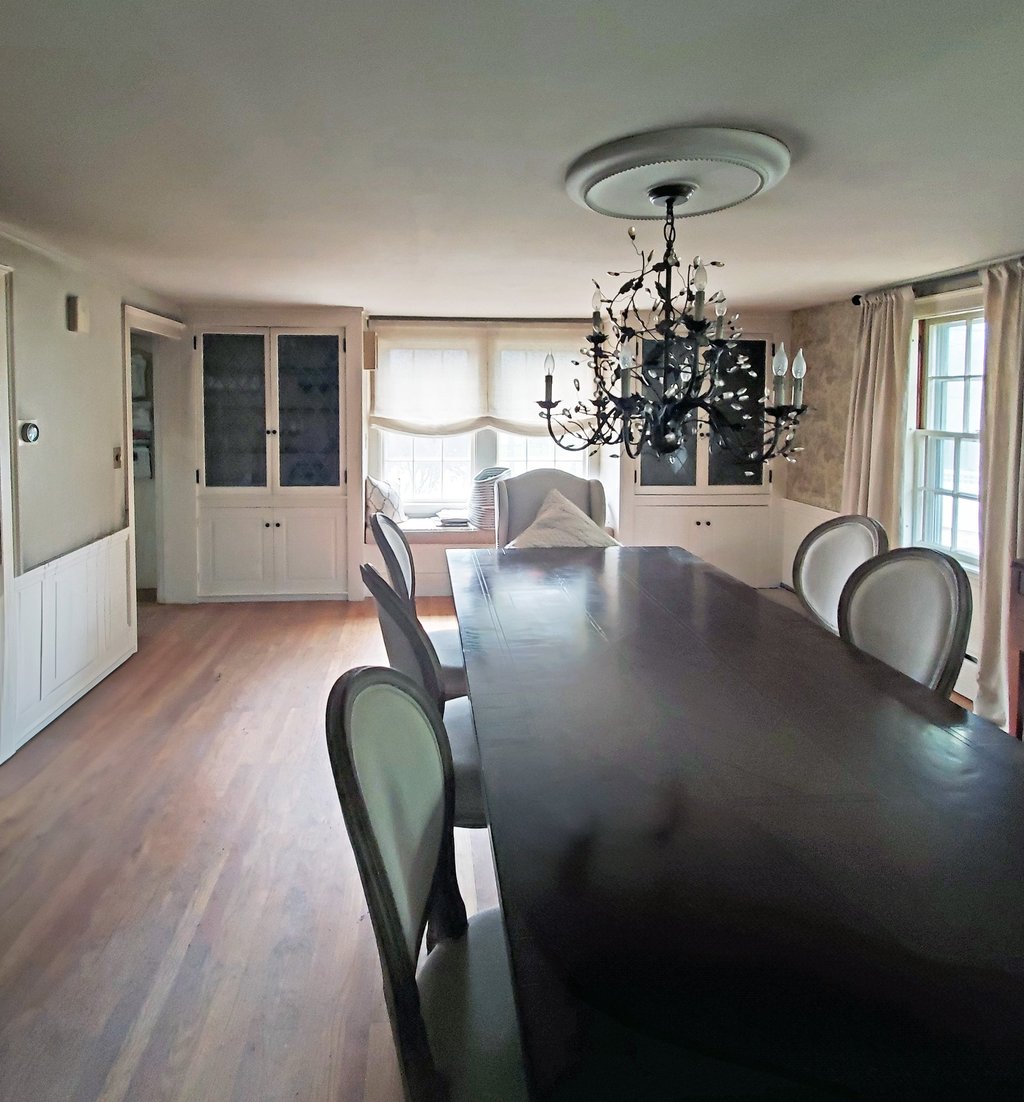
Before pic of one of my kitchen design in Reading, MA. The kitchen was relocated in what was the dining room.
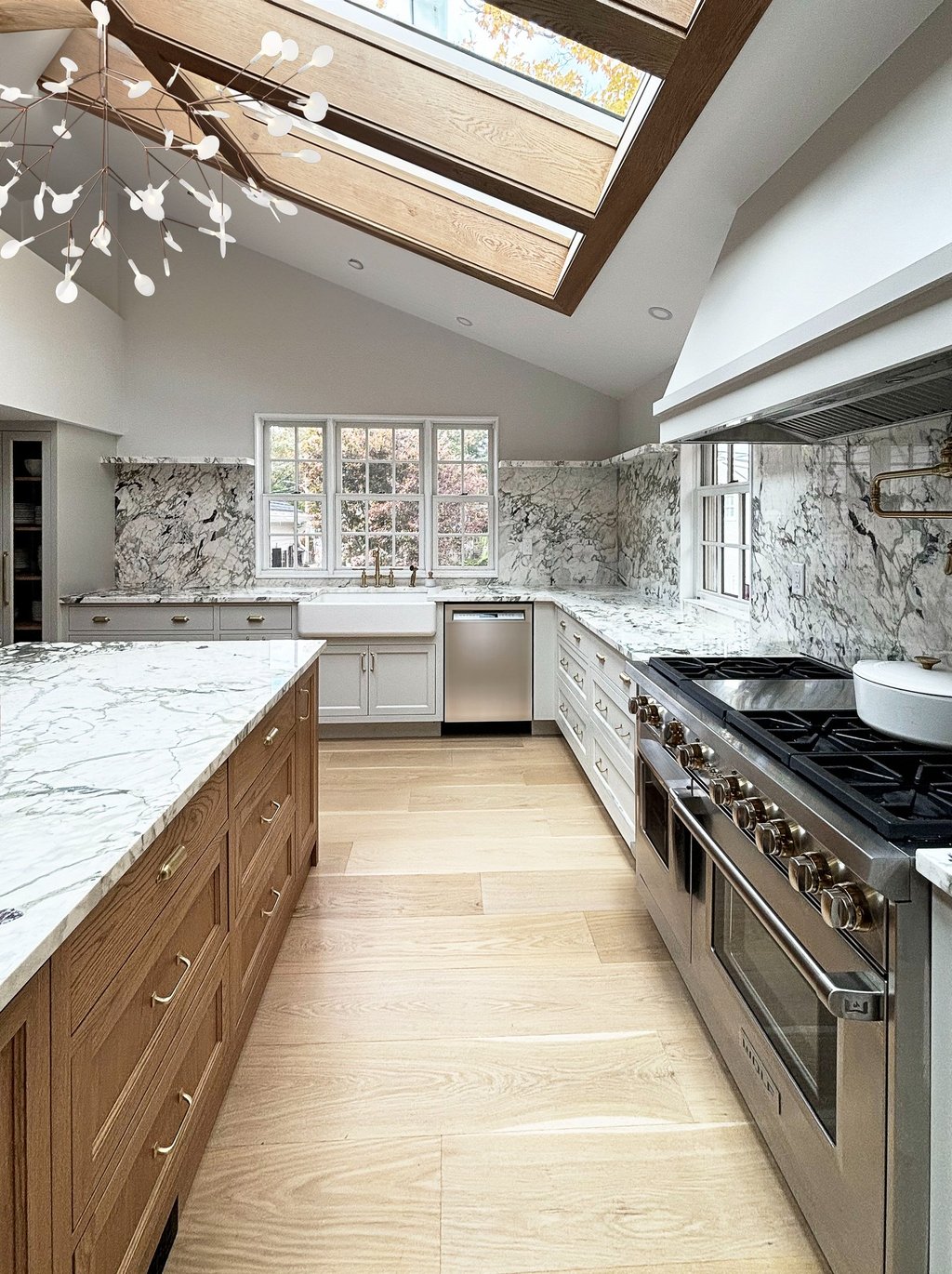
The finished kitchen, the sloped ceiling and skylight give this space a new dimension.
Not Carrara, Breccia Capraia, much more interesting.
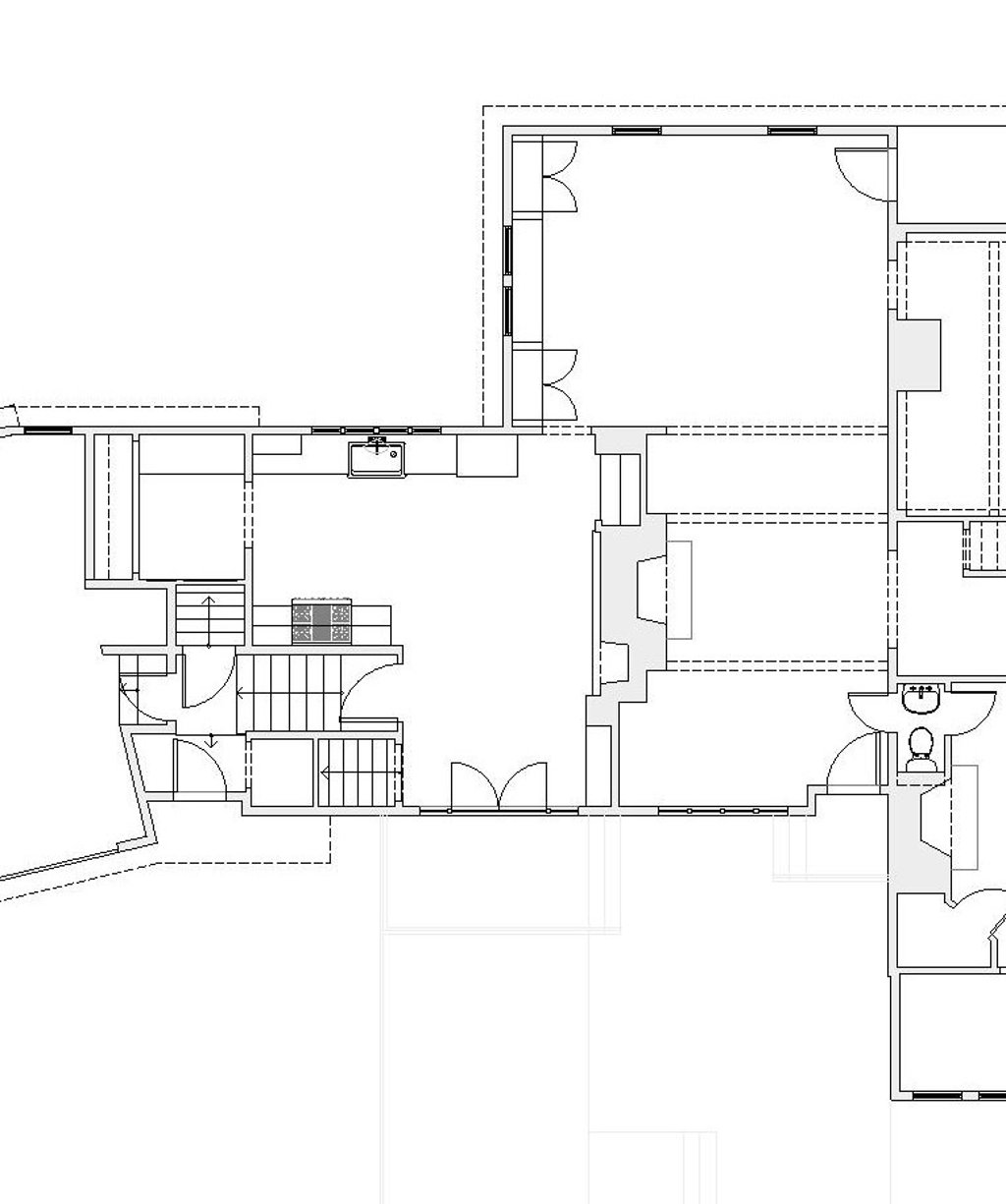
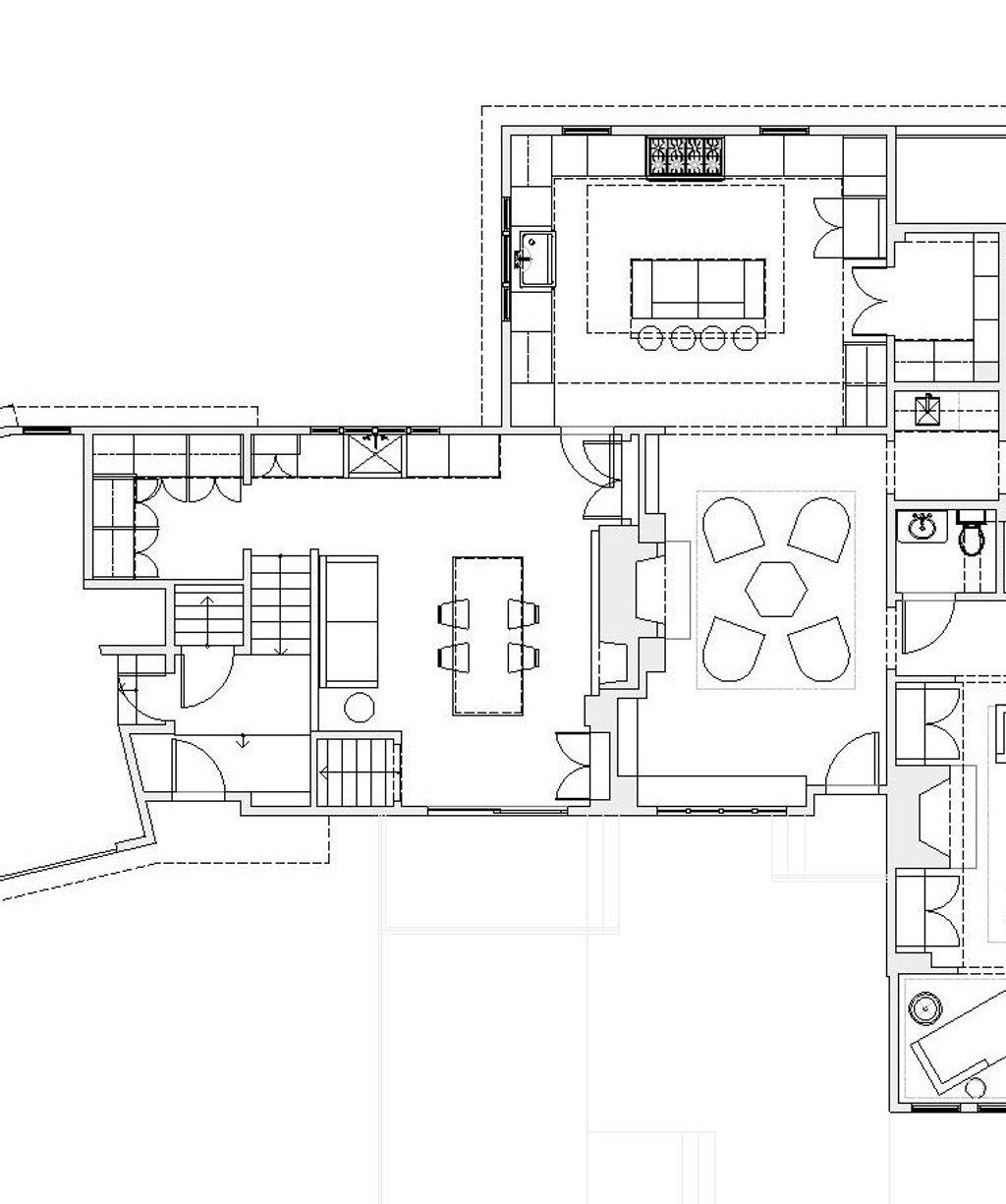
The before plan, the kitchen was in an awkward spot with a lot of sqft but no real space.
Relocating the kitchen allowed for a much better flow and for the sloped ceiling and skylights to happen.
A section showing the height of the room, on the left you can see what was the actual height of the kitchen.
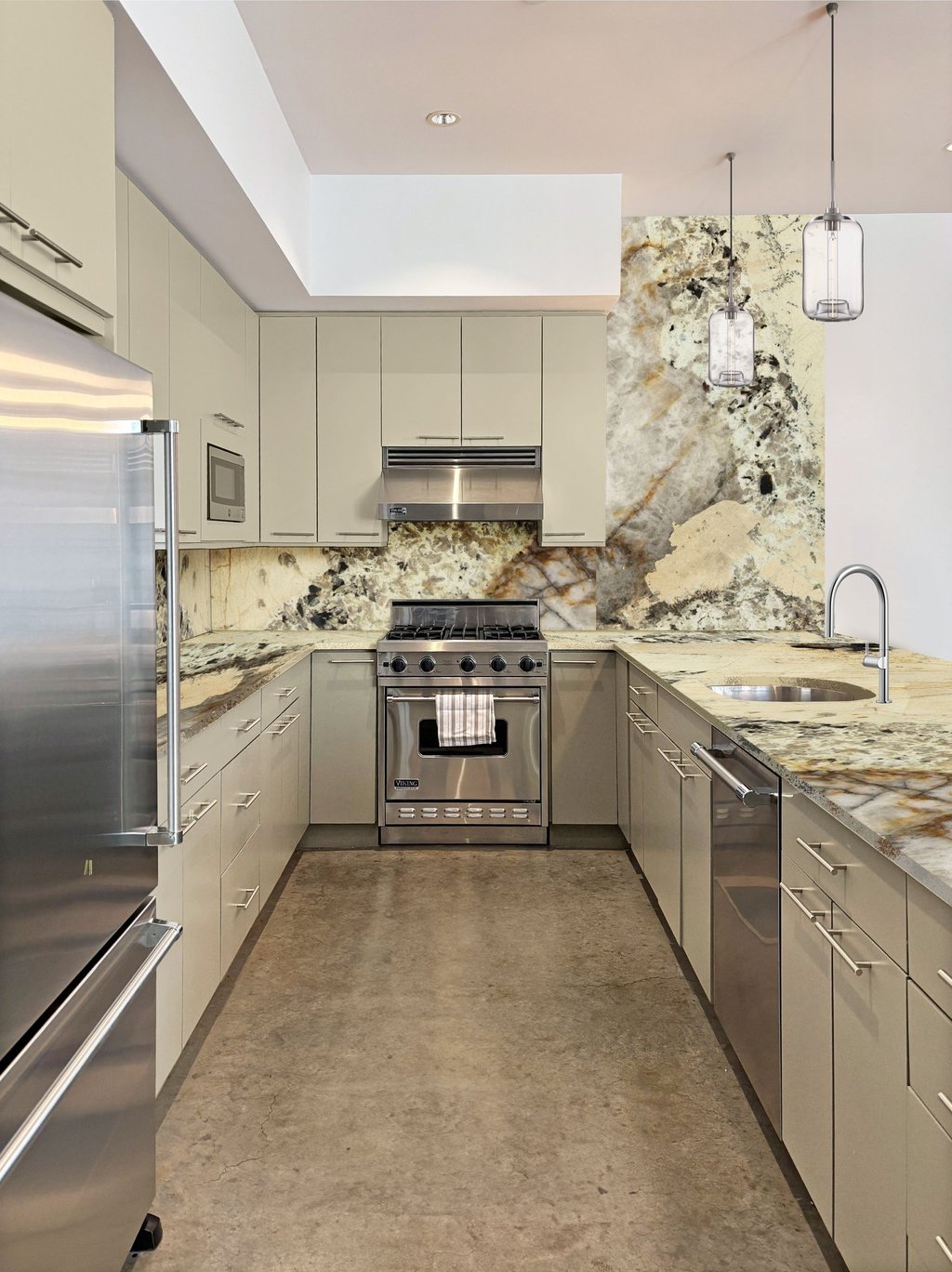
A colors and materials simulations from one ongoing projects in the South End. Cabinets in BM York Gray and Patagonia quartzite.
This is what I meant when I said that stone can be nature made art. A slab of Patagonia quartzite from Cumar.
________________________________________________________________________________________________________________________________________
Have a question about this topic or something else you've read here?
________________________________________________________________________________________________________________________________________
________________________________________________________________________________________________________________________________________
____________________________________
____________________________________