The Pimple on the Face of History: A Short Eulogy for 1970s Additions
Bad additions to historic homes in New England, why they happened, the restoration theory behind them, and the only two honest ways to fix them. From Viollet-le-Duc to asbestos siding, a brief history of how good buildings got ugly additions and what to do about it.
Erica Fossati
7 min read
A significant portion of my work is undoing what happened to historic homes in New England between roughly 1955 and 1990. If you own one of these homes, you probably already know something is wrong with it. You've been looking at it for years, feeling vaguely uncomfortable, trying to articulate what the problem is. This post is for you.
The problem, most of the time, is the addition.
Not all additions. Additions have always been part of how houses grow and change, and when they're done well they're invisible, meaning they feel like they always belonged. The ones I'm talking about are the ones that don't feel like they belong, that never felt like they belonged, and that everybody who has ever looked at the house has quietly registered as wrong without quite knowing why.
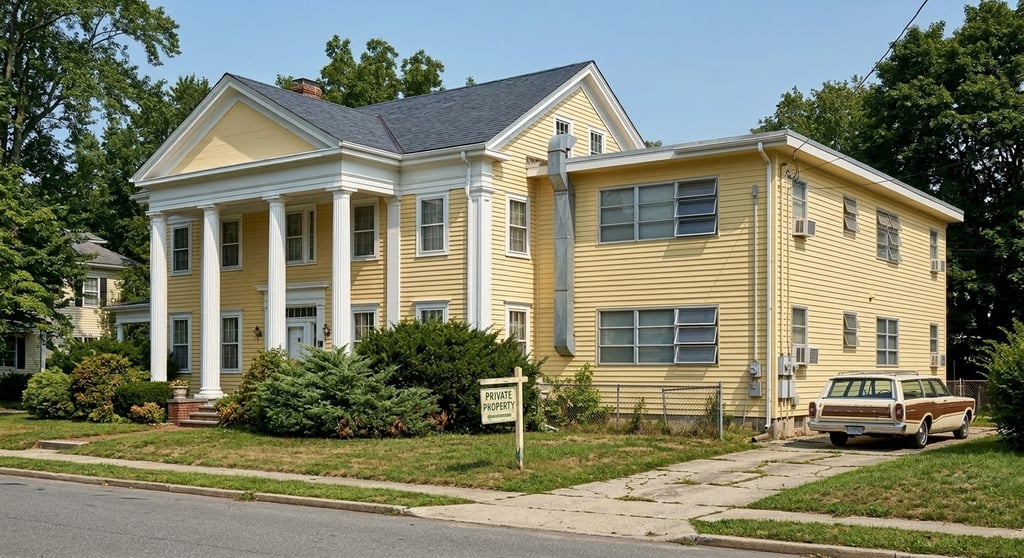
They tend to share the same characteristics. Same siding material as the original house. Same color, or close to it. Utterly different in form, proportion, roofline, and window placement from everything next to them. The result is a building that tried to match and failed, which is somehow worse than not trying at all.
Why Did This Happen
To understand why so many additions from this period look the way they do, you have to understand the intellectual climate that produced them, and that means starting with a very influential and very French man.
Eugène Viollet-le-Duc was a 19th-century architect and theorist who believed that the form of a building should express its underlying structure and construction logic honestly, that ornament and historical mimicry were essentially lies told in stone, and that a rationally designed building was a morally superior building. He was brilliant, prolific and genuinely visionary, and his structural rationalism influenced architects well into the 20th century. Louis Sullivan, who gave us Form Follows Function, captured Viollet-le-Duc's thinking precisely when he wrote that a rationally designed structure may not necessarily be beautiful, but no building can be beautiful that doesn't have a rationally designed structure. Sullivan took that idea and ran with it, and from there the line to modernism and functionalism is direct.
Form Follows Function is one of the foundational principles of architecture, right up there with Firmitas, Utilitas and Venustas from Vitruvius. It's essentially the second thing they teach you on your first day at architecture school at the Politecnico di Milano. The first thing they show you is a slideshow of the graves of famous architects, all dead at a very old age, all of them either at the office, on site, or on their way to one or the other when they went. A perfectly calibrated, completely non-traumatic way of communicating that if you're in this, you're in it for life. The first year is notoriously the weed-out year, with drop-off rates that have historically hovered around 30%. I have a strong suspicion the graves slides did most of the heavy lifting.
Architects don't retire. We die. We are also, as anyone who knows us will confirm, a major pain in the neck with our precision and pickiness, but that's another story.
Back to Viollet-le-Duc, who as it turns out had a complicated relationship with his own principles.
He wasn't shy about imposing his own vision onto historic fabric and calling it restoration.
He believed in completing a building as it should have been, bringing it to a state of perfection that may never have actually existed at any given moment. In his mind he wasn't copying or mimicking, he was continuing a structural logic, thinking as the original builders would have thought. The gargoyles on Notre-Dame de Paris are largely his invention. In practice the line between continuing a logic and simply making things up and calling it restoration turned out to be thinner than he cared to admit, and his critics called him out on exactly this. He wasn't lying exactly, but he wasn't being entirely honest with posterity either.
The Italians to the rescue. Camillo Boito and later Cesare Brandi developed what became the dominant framework for historic conservation in the 20th century, arguing that any new intervention on a historic structure should be clearly distinguishable from the original. Don't lie to posterity by making new work look old. When you restore or add to a historic building, the new parts should be recognizable as new, so that future historians and conservators can read the building accurately.
This is a serious and defensible position when applied to monuments of genuine cultural significance. The Colosseum infill is the classic example: new travertine, similar material, no ornament, clearly distinguishable up close, harmonious from a distance. Rigorous, evidence-based, intellectually honest work.
The problem is that this philosophy trickled down into residential architecture in a debased and thoughtless form. The theory got vulgarized. Contractors and architects working on ordinary houses in Lexington and Medford and Concord absorbed a vague cultural permission slip that said: contemporary interventions should look contemporary, historicism is dishonest, don't try to match what is already there. What they produced had none of the intellectual rigor or documentary discipline of actual conservation practice. It had only the laziness that the misapplied theory conveniently excused.
The other factor, and let's be honest about this, was money and materials. The postwar building boom prioritized speed and economy. Aluminum siding, asbestos shingles, cheap lumber, sliding aluminum windows: these were the materials of the era, and they were used on additions to houses that had been built with entirely different materials and entirely different intentions. The result wasn't just formally wrong, it was materially wrong. And it aged badly, because cheap materials always do.
In Italy we have a version of this problem too, and it's arguably worse. As a general rule, anything built before the Second World War is a restoration case: worth saving, worth the investment, worth doing carefully. Anything built after is, with some honorable exceptions, a demolition case. The postwar construction boom in Italy produced some of the ugliest buildings in a country that spent two thousand years building beautiful ones, and in some cases the damage to the historic built landscape was significant enough to trigger serious regulatory consequences.
This is part of why Italy now has the strictest architectural regulatory systems in the world, and the roots of that system go back much further than most people realize. The first Soprintendente in history was Raphael, yes, that Raphael, appointed by Pope Leo X in the early 16th century to oversee the materials being excavated in Rome for the construction of St. Peter's Basilica and to protect the ancient marbles, inscriptions, and fragments being unearthed across the city. The institution has Renaissance bones. What it became after the postwar damage is something considerably more formidable. The officials in the building departments and the Soprintendenza are, and I mean this with a degree of affection, the Gestapo of architecture. They don't negotiate, they don't make exceptions, and they're not interested in your budget constraints. If you're an American buyer considering a property in Italy and you have no idea what you're walking into, that's exactly why I offer architectural assessment services for Italian properties. You need someone who has dealt with these institutions before and knows how they think.
New England isn't quite that dire, but the principle holds.
What To Do About It
If you have one of these additions, you have two honest options.
The first is to go stylistic. Design the addition as it would have been designed if it had been part of the original house, using the same materials, the same proportions, the same window profiles, the same roofline logic. Done well, this is invisible, meaning it feels like it was always there. Done badly, it's pastiche. The difference is in the quality of the research and the quality of the execution, which is why it matters who you hire.
The second is to go genuinely contemporary, but with intelligence. A well-designed modern addition to a historic house can be extraordinary. It doesn't pretend to be something it isn't, it's honest about being new, but it's honest in a way that is thoughtful, that respects the scale and the materials and the rhythm of the original, that doesn't simply drop a modern blob next to a Federal Colonial and call it a day. There are beautiful examples of this approach and I'll write about them separately.
If neither option is in the cards right now because of budget or timing or a hundred other legitimate reasons, that's completely fine. These things get done when they get done. I'm not here to pressure anyone into a renovation they're not ready for. I'm here to name the problem clearly, because in my experience most people who own one of these houses already sense that something is off, they just haven't had anyone say it out loud to them yet.
A Note on the Images
I asked AI to generate the images and things got out of hand quickly, in the best possible way.
I didn't want to use photographs of actual houses because I have no interest in publicly shaming anyone. I do occasionally offend people's feelings about their additions in person, but that is a private conversation, I bring cake, and everyone survives. I don't do it because I enjoy delivering bad news, I do it because if I start nodding along at everything I see regardless of what I actually think, my professional opinion becomes worthless. The whole point of hiring someone with experience and a point of view is that they'll tell you the truth.
Let us all learn from our mistakes and stop building pimples on the face of history.
If you own one of these houses and you've been staring at that addition for years wondering what to do about it, I'm just a tear drop away.
Ciao.
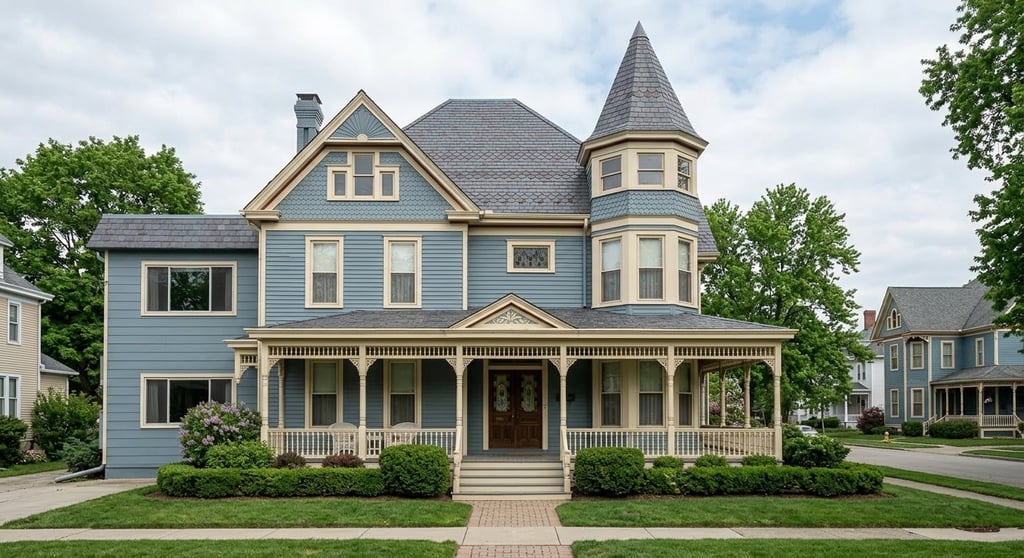
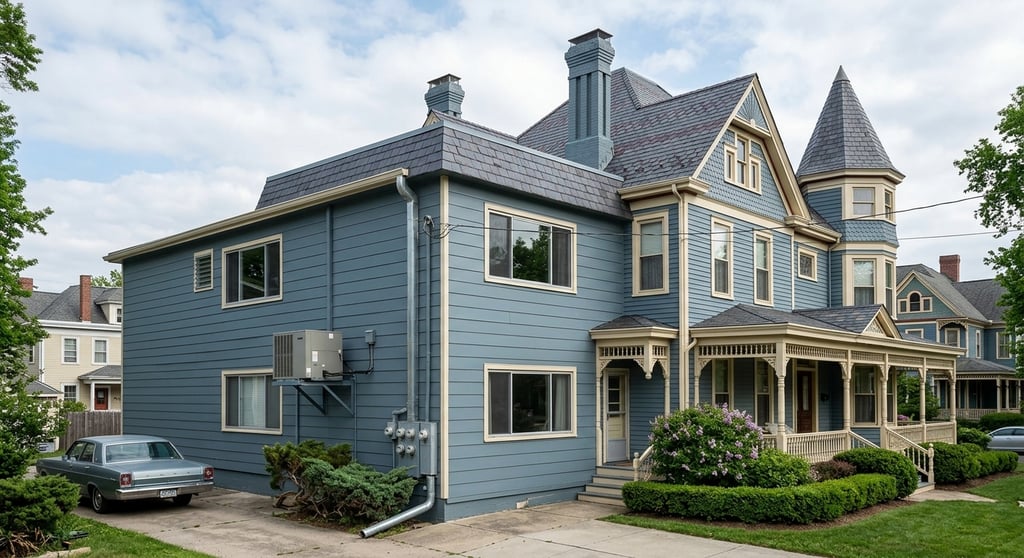
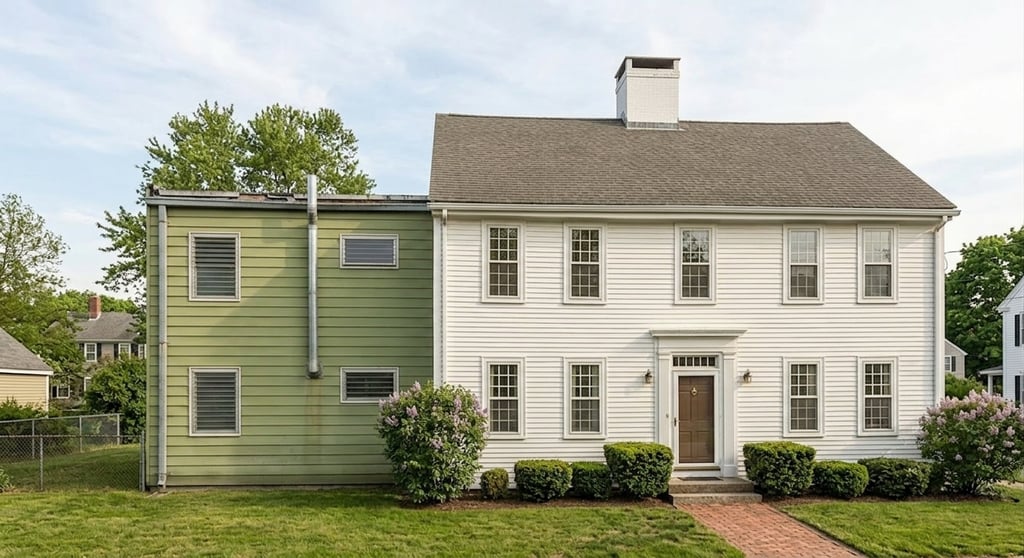
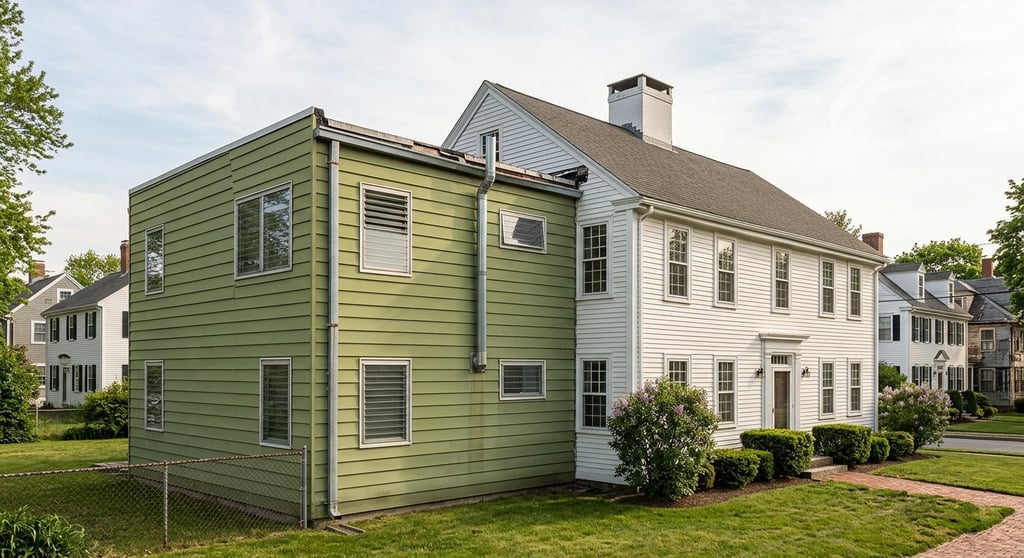
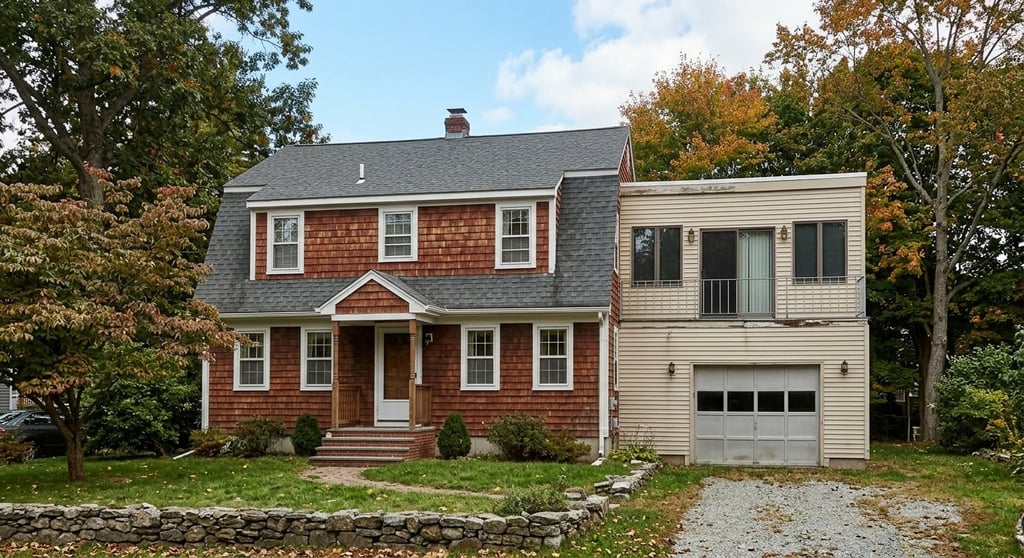
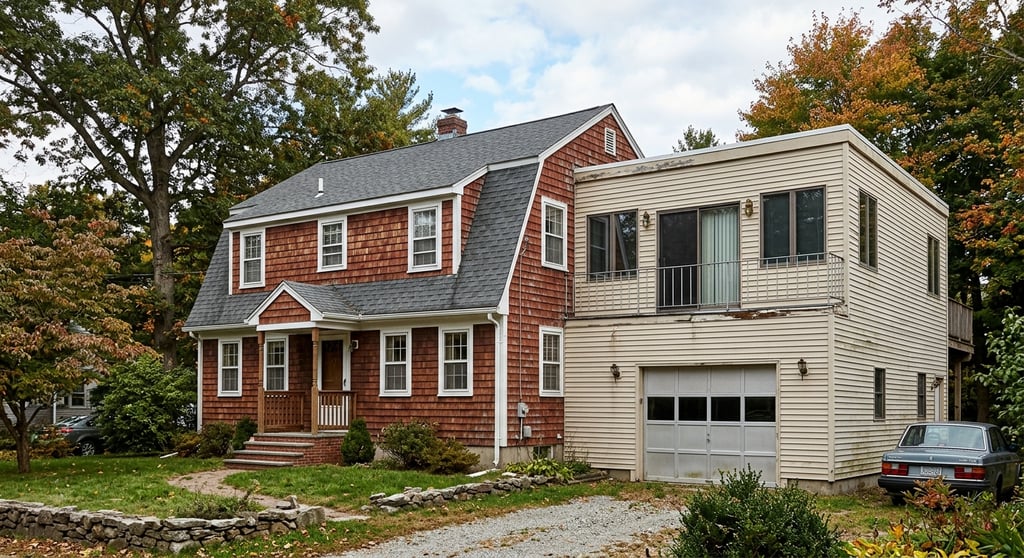
This Victorian was minding its own business until the 1970s showed up.
The raised AC unit gives me medieval sanitation feature vibes.
A dignified Greek Revival and the box that showed up in 1974 and never got the hint. I particularly love the giant exposed metal duct.
I literally died on this one. AI's editorial opinion.
Client: "I really want something that would stand out but with dignity!". Contractor: "Hold my beer..."
I walked around it. It didn't get better.
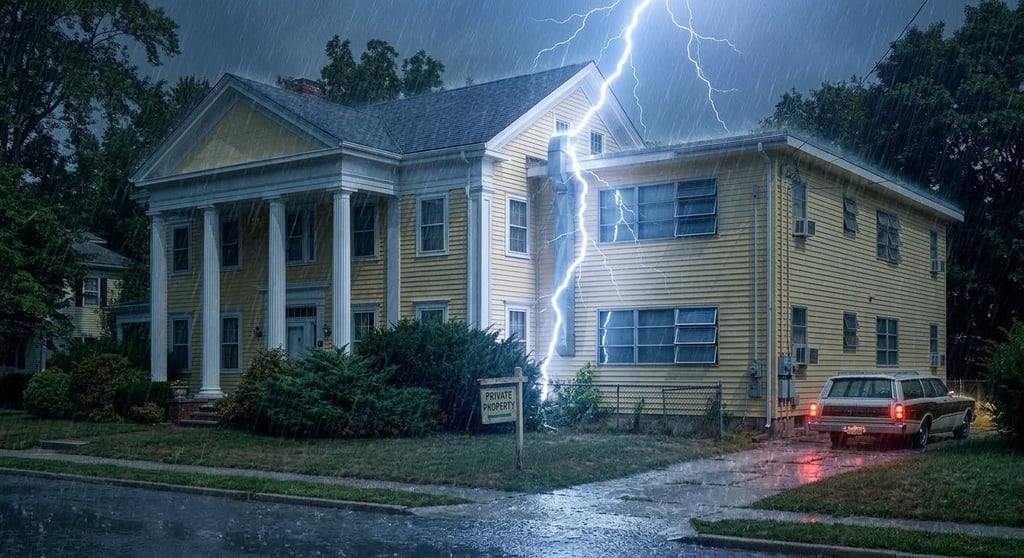
In this one AI really outdid herself, it hurts my eyes.
Would be a nice set for a horror movie.
The views expressed in this journal are my own and reflect my professional experience and personal opinions. Any references to specific places, institutions, or practices are made for informational and illustrative purposes only. Nothing in this journal constitutes legal, architectural, or regulatory advice. Always consult a qualified professional for your specific situation.
Have a question about this topic or something else you've read here?
________________________________________________________________________________________________________________________________________
________________________________________________________________________________________________________________________________________
____________________________________
____________________________________